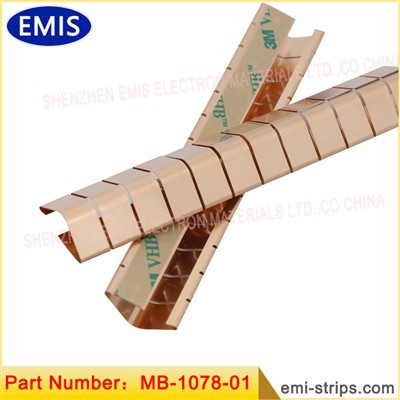

As a supplier of SMT EMI Contact Finger, I've had the privilege of witnessing firsthand the remarkable evolution and significance of this component in the electronics industry. In this blog, I aim to delve into the low - frequency performance of SMT EMI Contact Finger, exploring its characteristics, influencing factors, and applications.
Understanding SMT EMI Contact Finger
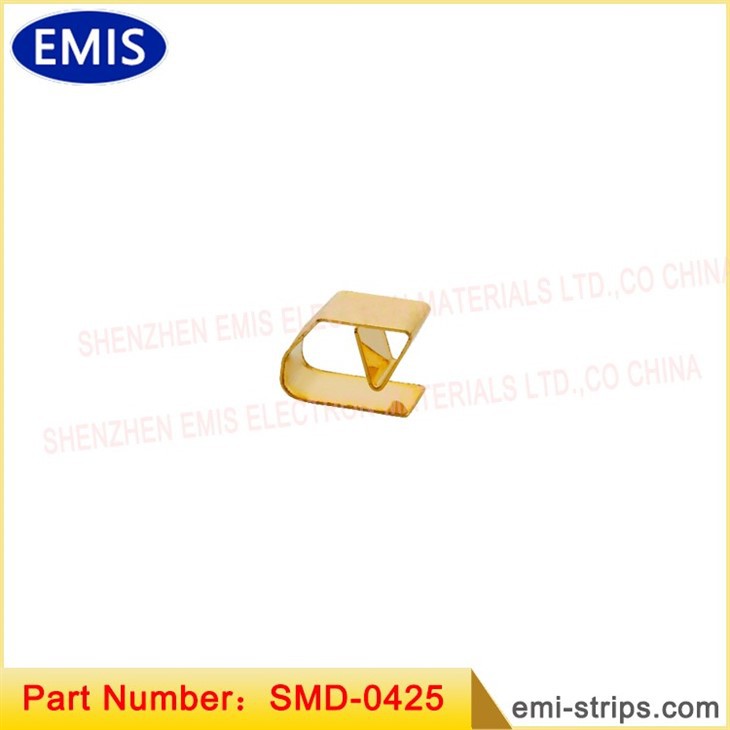
Before we discuss its low - frequency performance, let's briefly introduce what SMT EMI Contact Finger is. SMT (Surface Mount Technology) EMI (Electromagnetic Interference) Contact Finger is a type of component used to provide electrical contact and EMI shielding in electronic devices. It is designed to be surface - mounted on printed circuit boards (PCBs), which offers several advantages such as high - density mounting, reduced assembly time, and improved mechanical stability.
These contact fingers are typically made of conductive materials like beryllium copper or phosphor bronze, and they are often gold - plated to enhance conductivity and corrosion resistance. You can find more information about related products on our website, including SMD Gold Plated Spring and SMT Spring Contacts. For detailed information about SMT EMI Contact Finger, please visit SMT EMI Contact Finger.
Low - Frequency Performance Characteristics
Conductivity
One of the most important aspects of the low - frequency performance of SMT EMI Contact Finger is its conductivity. At low frequencies (usually considered to be in the range of a few hertz to a few kilohertz), the resistance of the contact finger plays a crucial role. A low - resistance contact finger can ensure efficient current transfer, which is essential for the proper functioning of electronic circuits.
The conductivity of the contact finger is affected by several factors. The material of the contact finger is a primary factor. As mentioned earlier, materials like beryllium copper and phosphor bronze have good electrical conductivity. Gold plating further reduces the surface resistance and protects the underlying material from oxidation, which helps to maintain stable conductivity over time.
Inductance
Inductance is another key parameter in the low - frequency performance of SMT EMI Contact Finger. At low frequencies, the inductive reactance is relatively small compared to the resistance. However, even a small inductance can have an impact on the overall electrical performance, especially in circuits where high - speed signal transmission is required.
The shape and structure of the contact finger can influence its inductance. For example, a long and thin contact finger may have a higher inductance compared to a shorter and wider one. Designers need to carefully consider the shape and dimensions of the contact finger to minimize inductance while meeting other requirements such as mechanical flexibility and contact force.
Capacitance
Capacitance also plays a role in the low - frequency performance of SMT EMI Contact Finger. Although the capacitance between the contact finger and the surrounding components is usually small at low frequencies, it can still affect the impedance matching and signal integrity.
The capacitance is related to the physical proximity of the contact finger to other conductive elements on the PCB. For instance, if the contact finger is placed too close to a ground plane or another signal trace, the capacitance may increase, which can lead to signal attenuation and distortion.
Influencing Factors on Low - Frequency Performance
Material Properties
As mentioned before, the material of the SMT EMI Contact Finger has a significant impact on its low - frequency performance. Different materials have different electrical and mechanical properties. For example, beryllium copper is known for its high strength, good conductivity, and excellent spring characteristics. Phosphor bronze, on the other hand, is more cost - effective and has relatively good electrical conductivity.
The choice of material also affects the surface finish. Gold plating is a popular choice for its low contact resistance and corrosion resistance. However, other surface finishes such as nickel or tin plating may also be used depending on the specific application requirements.
Manufacturing Process
The manufacturing process can also influence the low - frequency performance of SMT EMI Contact Finger. Precision manufacturing techniques are required to ensure consistent dimensions and surface quality. Any irregularities in the shape or surface of the contact finger can lead to variations in resistance, inductance, and capacitance.
For example, if the contact finger has a rough surface, it may increase the contact resistance and cause signal loss. The manufacturing process also affects the mechanical properties of the contact finger, such as its contact force and flexibility. A proper contact force is necessary to ensure good electrical contact, while sufficient flexibility allows the contact finger to adapt to different mechanical stresses without losing its electrical performance.
Environmental Conditions
Environmental conditions can have a significant impact on the low - frequency performance of SMT EMI Contact Finger. Temperature, humidity, and chemical exposure can all affect the electrical and mechanical properties of the contact finger.
High temperatures can cause the material of the contact finger to expand, which may change its dimensions and affect its electrical performance. Humidity can lead to oxidation and corrosion, especially if the surface finish is not properly protected. Chemical exposure, such as exposure to solvents or cleaning agents, can also damage the contact finger and degrade its performance.

Applications of SMT EMI Contact Finger with Good Low - Frequency Performance
Consumer Electronics
In consumer electronics such as smartphones, tablets, and laptops, SMT EMI Contact Finger with good low - frequency performance is widely used. These devices require efficient power transfer and signal transmission at low frequencies. The contact fingers are used to connect different components on the PCB, such as the battery, display, and antenna.
For example, in a smartphone, the SMT EMI Contact Finger is used to connect the battery to the main circuit board. A good low - frequency performance ensures stable power supply and reliable operation of the device.
Automotive Electronics
Automotive electronics also rely on SMT EMI Contact Finger with good low - frequency performance. In automotive applications, the contact fingers are used in various systems such as the engine control unit, infotainment system, and safety systems.
The harsh environmental conditions in automotive applications, such as high temperatures, vibrations, and humidity, require the contact fingers to have excellent reliability and stability. Good low - frequency performance is essential for ensuring proper functioning of these critical systems.
Industrial Electronics
In industrial electronics, SMT EMI Contact Finger is used in a wide range of applications, including automation equipment, power supplies, and communication devices. These applications often require high - precision signal transmission and power distribution at low frequencies.
For example, in an industrial automation system, the contact fingers are used to connect sensors, actuators, and control modules. A reliable low - frequency performance of the contact fingers is crucial for the accurate operation of the entire system.
Conclusion
The low - frequency performance of SMT EMI Contact Finger is a complex topic that involves multiple aspects such as conductivity, inductance, and capacitance. Understanding these performance characteristics and the influencing factors is essential for designers and engineers to select the right contact fingers for their applications.
As a supplier of SMT EMI Contact Finger, we are committed to providing high - quality products with excellent low - frequency performance. Our products are designed and manufactured using advanced technology and strict quality control measures to ensure reliability and stability in various applications.
If you are interested in our SMT EMI Contact Finger products or have any questions about their low - frequency performance, please feel free to contact us for procurement and further discussion. We look forward to working with you to meet your specific requirements.
References
- "Electromagnetic Compatibility Engineering" by Henry W. Ott.
- "Handbook of Electronic Packaging Design" by C. P. Wong.
- Industry white papers on SMT components and EMI shielding.