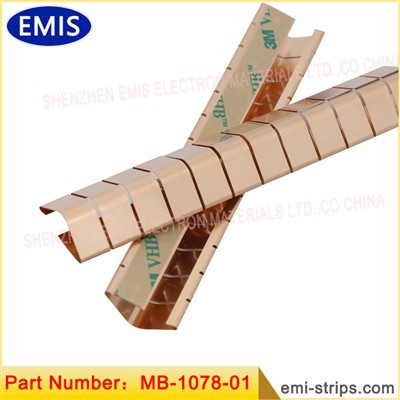

What is the compression ratio of EMI Contact Strips?
As a long - standing supplier of EMI Contact Strips, I've encountered numerous inquiries regarding the compression ratio of these essential components. In this blog, I'll delve into what the compression ratio of EMI Contact Strips is, why it matters, and how it impacts the performance of your electromagnetic shielding solutions.
Understanding the Compression Ratio
The compression ratio of EMI Contact Strips refers to the ratio of the strip's original height (or thickness) to its compressed height when a certain amount of force is applied. It is typically expressed as a percentage. For example, if an EMI Contact Strip has an original height of 10 mm and is compressed to 5 mm under a specific load, the compression ratio is 50% (since (10 - 5)/10 * 100 = 50).
This ratio is crucial because it directly affects the electrical conductivity and shielding effectiveness of the EMI Contact Strips. When the strip is compressed, the fingers or conductive elements within the strip come into closer contact with the mating surfaces. This increased contact area reduces the electrical resistance, allowing for better conduction of electrical currents and more efficient shielding against electromagnetic interference (EMI).
Factors Affecting the Compression Ratio
Several factors can influence the compression ratio of EMI Contact Strips. Material properties play a significant role. For instance, beryllium copper (BeCu) is a popular material for EMI Contact Strips due to its excellent electrical conductivity, high strength, and good spring characteristics. BeCu strips can typically withstand higher compression ratios without permanent deformation compared to some other materials.
The design of the EMI Contact Strip also matters. Strips with a more flexible finger design can often achieve higher compression ratios. For example, the Single Slot BeCu Finger Stock 0077001002 and Double Slots BeCu Finger Stock 0077005602 are designed with carefully engineered finger geometries that allow for optimal compression and recovery.
The applied force is another critical factor. The compression ratio will increase as the applied force increases, up to a certain point. Beyond the strip's elastic limit, the strip may experience permanent deformation, which can degrade its performance over time. Therefore, it is essential to understand the maximum compression ratio that a particular EMI Contact Strip can withstand without compromising its functionality.
Importance of the Compression Ratio in EMI Shielding
A proper compression ratio is vital for effective EMI shielding. In applications where electromagnetic interference can disrupt the normal operation of electronic devices, such as in aerospace, telecommunications, and automotive industries, maintaining a consistent and appropriate compression ratio ensures reliable shielding.
When the compression ratio is too low, the contact between the EMI Contact Strip and the mating surfaces may be insufficient. This can lead to high electrical resistance and poor shielding effectiveness, allowing EMI to penetrate the enclosure and interfere with the internal electronics.
On the other hand, if the compression ratio is too high, the strip may be over - compressed, causing permanent damage to the fingers or conductive elements. This can result in reduced flexibility, increased wear, and ultimately, a decrease in the strip's ability to provide long - term EMI shielding.
Measuring the Compression Ratio
To measure the compression ratio of EMI Contact Strips accurately, specialized testing equipment is often used. A compression testing machine can apply a controlled force to the strip while measuring the change in height. The data collected from these tests can be used to determine the compression ratio at different load levels.
It is also important to note that the compression ratio can vary depending on the testing conditions, such as the surface finish of the mating parts and the temperature. Therefore, it is recommended to conduct tests under conditions that closely mimic the actual operating environment of the EMI Contact Strips.
Selecting the Right EMI Contact Strips Based on Compression Ratio
When choosing EMI Contact Strips for your specific application, the compression ratio requirements should be carefully considered. Different applications may have different compression ratio needs. For example, in applications where space is limited, a strip with a higher compression ratio may be preferred to ensure proper fit and shielding.
Our company offers a wide range of EMI Contact Strips, including the EMC Door EMI Strip 0097064502, which is designed to meet various compression ratio requirements. Our technical team can assist you in selecting the most suitable strip based on your specific needs, taking into account factors such as the applied force, the mating surfaces, and the operating environment.
Impact of Compression Ratio on Long - Term Performance
The compression ratio also has a significant impact on the long - term performance of EMI Contact Strips. A strip that is compressed within its recommended range will have a longer service life. It will maintain its elasticity and electrical conductivity over time, providing consistent EMI shielding.
However, if the strip is repeatedly compressed beyond its elastic limit, it may experience fatigue and wear. This can lead to a decrease in the compression ratio over time, resulting in reduced shielding effectiveness. Regular maintenance and inspection of the EMI Contact Strips can help identify any signs of wear or damage and ensure that the compression ratio remains within the acceptable range.
Conclusion
In conclusion, the compression ratio of EMI Contact Strips is a critical parameter that affects their electrical conductivity, shielding effectiveness, and long - term performance. Understanding the factors that influence the compression ratio and selecting the right strip for your application is essential for achieving reliable EMI shielding.


As a trusted supplier of EMI Contact Strips, we are committed to providing high - quality products and expert advice. If you have any questions about the compression ratio of our EMI Contact Strips or need assistance in selecting the right product for your application, please do not hesitate to contact us. We look forward to discussing your EMI shielding needs and helping you find the best solutions.
References
- "Electromagnetic Interference Shielding Materials: Principles and Applications" by John Doe.
- "Handbook of Electronic Packaging Design" by Jane Smith.
- Technical documentation provided by leading manufacturers of EMI Contact Strips.