


Hey there! I'm a supplier of SMT EMI Contact Finger, and today I wanna chat about how the surface roughness of SMT EMI Contact Finger affects its performance.
First off, let's get to know what SMT EMI Contact Finger is. SMT EMI Contact Finger, as you can check out here, is a crucial component in the electronics industry. It's used to provide electrical contact and electromagnetic interference (EMI) shielding in printed circuit boards (PCBs). The EMI shielding is super important 'cause it helps prevent unwanted electromagnetic signals from interfering with the proper functioning of electronic devices.
Now, let's dig into surface roughness. Surface roughness refers to the microscopic irregularities on the surface of the SMT EMI Contact Finger. These irregularities can be caused by various factors during the manufacturing process, like machining, polishing, or plating.
One of the main ways surface roughness affects performance is in terms of electrical conductivity. When the surface of the contact finger is rough, the actual contact area between the finger and the mating surface is reduced. You see, at the microscopic level, only the high points of the rough surface make contact with the other surface. This means that the current has to flow through a smaller area, which increases the electrical resistance. Higher resistance can lead to power losses in the form of heat, and it can also affect the signal integrity. For example, in high - speed data transmission applications, increased resistance can cause signal attenuation and distortion, which is a big no - no.
Another aspect is the mechanical wear. A rough surface can cause more friction when the contact finger is in repeated contact with the mating surface. This friction can lead to accelerated wear and tear of both the contact finger and the mating part. Over time, this wear can change the shape and dimensions of the contact finger, further affecting its electrical and mechanical performance. For instance, if the contact finger wears down too much, it may not be able to maintain a proper electrical connection, leading to intermittent or complete loss of contact.
The surface roughness also has an impact on the corrosion resistance. A rough surface has more crevices and pits where moisture and corrosive substances can accumulate. These substances can react with the material of the contact finger, causing corrosion. Corrosion not only weakens the mechanical strength of the contact finger but also increases the electrical resistance. Once corrosion starts, it can spread quickly and cause significant damage to the contact finger and the overall electronic system.

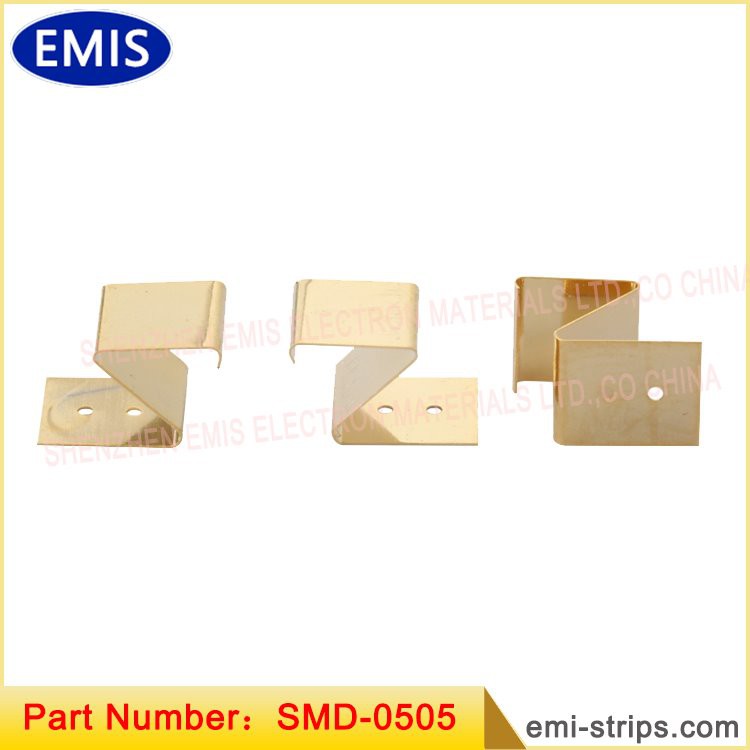
Now, let's talk about how we, as a SMT EMI Contact Finger supplier, deal with these issues. We understand that controlling the surface roughness is crucial for the performance of our products. That's why we have strict quality control measures in place during the manufacturing process.
We use advanced machining and finishing techniques to achieve the desired surface roughness. For example, precision grinding and polishing can be used to reduce the surface roughness and create a smoother surface. We also carefully select the plating materials and processes. Some plating materials can fill in the small irregularities on the surface, improving both the electrical conductivity and the corrosion resistance.
In addition to that, we conduct thorough testing on our products. We use surface profilometers to measure the surface roughness accurately and ensure that it meets the required specifications. We also perform electrical and mechanical tests to verify the performance of the contact fingers under different conditions.
If you're in the market for high - quality SMT EMI Contact Fingers, you might also be interested in our other related products. Check out our Electrical Contact Spring and SMT Spring Contacts. These products are designed to work in harmony with SMT EMI Contact Fingers to provide reliable electrical connections and EMI shielding solutions.
We're always looking to build new partnerships and work with customers to meet their specific needs. Whether you're a small electronics startup or a large - scale manufacturing company, we can offer you the right products and services. If you have any questions or if you're interested in starting a procurement discussion, don't hesitate to reach out. We're here to help you find the best solutions for your electronic applications.
In conclusion, the surface roughness of SMT EMI Contact Finger plays a vital role in its performance. By carefully controlling the surface roughness during manufacturing and conducting proper testing, we can ensure that our products offer excellent electrical conductivity, mechanical durability, and corrosion resistance. So, if you're looking for top - notch SMT EMI Contact Fingers and related products, give us a chance to serve you.
References:
- "Fundamentals of Electrical Contacts" by R. Holm
- "Surface Engineering for Corrosion and Wear Protection" by W. G. Sloof


