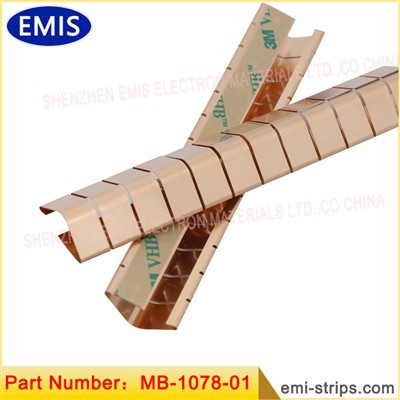

Installing EMI contact strips in tight spaces can be a challenging yet crucial task, especially in industries where electromagnetic interference (EMI) shielding is essential. As a supplier of EMI contact strips, I've encountered numerous situations where clients face difficulties in fitting these strips into confined areas. In this blog, I'll share some practical tips and techniques on how to install EMI contact strips in tight spaces effectively.
Understanding EMI Contact Strips
Before delving into the installation process, it's important to understand what EMI contact strips are and why they are necessary. EMI contact strips are used to provide a conductive path between two surfaces, thereby reducing the electromagnetic interference that can disrupt the operation of electronic devices. These strips come in various forms, such as finger stock gaskets, spring fingers, and conductive elastomers, each with its own unique properties and applications.
Assessing the Space
The first step in installing EMI contact strips in tight spaces is to assess the area where the strips will be installed. This involves measuring the dimensions of the space, identifying any obstacles or irregularities, and determining the type of EMI contact strip that is most suitable for the application. For example, if the space is very narrow, a finger stock gasket may be the best option as it can be easily compressed to fit into tight areas. On the other hand, if the surface is irregular, a conductive elastomer strip may be more appropriate as it can conform to the shape of the surface.
Preparing the Surface
Once you have selected the appropriate EMI contact strip, the next step is to prepare the surface where the strip will be installed. This involves cleaning the surface to remove any dirt, grease, or other contaminants that could interfere with the conductivity of the strip. You can use a mild detergent and a clean cloth to clean the surface, and then dry it thoroughly before proceeding with the installation.
Cutting the Strip
In many cases, you may need to cut the EMI contact strip to fit the dimensions of the space. When cutting the strip, it's important to use a sharp pair of scissors or a utility knife to ensure a clean, straight cut. You should also measure the length of the strip carefully to avoid cutting it too short or too long. If you are using a finger stock gasket, you may need to use a special tool to cut the individual fingers to the desired length.
Installing the Strip
Once the strip has been cut to the appropriate length, the next step is to install it in the space. There are several methods that you can use to install the strip, depending on the type of strip and the application. One common method is to use adhesive tape to attach the strip to the surface. You can apply the tape to the back of the strip and then press it firmly onto the surface, making sure that it is in contact with the entire surface area. Another method is to use a mechanical fastener, such as a screw or a clip, to secure the strip in place. This method is often used in applications where the strip needs to be removed or replaced frequently.
Testing the Installation
After the EMI contact strip has been installed, it's important to test the installation to ensure that it is working properly. You can use a multimeter or other testing equipment to measure the conductivity of the strip and to check for any signs of electromagnetic interference. If the test results indicate that the strip is not working properly, you may need to adjust the installation or replace the strip.
Tips for Installing EMI Contact Strips in Tight Spaces
- Use a magnifying glass or a microscope to help you see the details of the installation process, especially if the space is very small.
- Work slowly and carefully to avoid damaging the strip or the surface where it is being installed.
- Use a small amount of lubricant, such as silicone grease, to help the strip slide into place more easily.
- If possible, install the strip in a clean, dry environment to prevent contamination.
- Keep the strip away from sharp edges or other objects that could damage it.
Conclusion
Installing EMI contact strips in tight spaces can be a challenging task, but with the right tools, techniques, and preparation, it can be done effectively. By following the tips and guidelines outlined in this blog, you can ensure that your EMI contact strips are installed correctly and are providing the necessary shielding against electromagnetic interference. If you have any questions or need further assistance with installing EMI contact strips, please don't hesitate to contact us. We are a leading supplier of EMI contact strips and can provide you with the products and support you need to meet your specific requirements.


As a supplier, we offer a wide range of EMI contact strips, including ESD Grounding Finger Stock Gaskets 0097004302, EMI Shielding Fingerstrips 0097055502, and Finger Stock Gasket. Our products are designed to provide high-performance EMI shielding in a variety of applications, and we can work with you to find the best solution for your needs. If you are interested in purchasing EMI contact strips or would like to discuss your requirements further, please contact us today. We look forward to hearing from you and helping you with your EMI shielding needs.
References
- "Electromagnetic Interference Shielding Handbook" by Kenneth L. Kaiser
- "EMI/RFI Shielding Materials and Applications" by John D. Adam