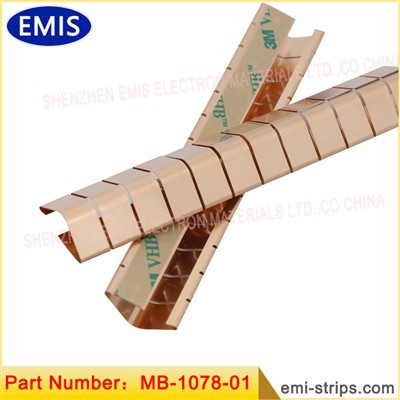

As a supplier of EMI Contact Strips, ensuring the consistent performance of these products is not only a technical challenge but also a commitment to our customers. In this blog, I will share some key strategies and practices that we implement to maintain the high - quality and consistent performance of EMI Contact Strips.
Understanding the Basics of EMI Contact Strips
EMI (Electromagnetic Interference) Contact Strips are essential components used to prevent electromagnetic interference between different electronic devices or components. They work by providing a conductive path that allows the flow of electrical current, thus reducing the amount of electromagnetic radiation that can escape or enter a device. These strips are commonly used in various industries, including telecommunications, aerospace, and automotive.
The performance of EMI Contact Strips is typically measured by several key parameters, such as conductivity, shielding effectiveness, compression force, and durability. Conductivity refers to the ability of the strip to conduct electrical current, which is crucial for effective EMI shielding. Shielding effectiveness measures how well the strip can block electromagnetic radiation. Compression force is important because it determines how well the strip can maintain contact with the mating surfaces, and durability ensures that the strip can withstand repeated use and environmental factors.
Material Selection
One of the most critical factors in ensuring the consistent performance of EMI Contact Strips is the selection of high - quality materials. We carefully choose materials that have excellent electrical conductivity, corrosion resistance, and mechanical properties. For example, copper - beryllium alloys are often used because they offer high conductivity, good spring properties, and excellent corrosion resistance. Stainless steel is another popular choice, especially for applications where high strength and durability are required.
We source our materials from trusted suppliers and conduct rigorous quality control checks upon receipt. This includes testing the chemical composition, electrical conductivity, and mechanical properties of the materials to ensure they meet our strict specifications. By using high - quality materials, we can minimize the risk of performance variations caused by material defects or impurities.
Precision Manufacturing Processes
Precision manufacturing is essential for producing EMI Contact Strips with consistent performance. We use advanced manufacturing techniques, such as stamping, forming, and plating, to ensure that each strip is produced to exact specifications.
Stamping is used to cut the strips from the raw material with high precision. We use state - of - the - art stamping presses and tooling to ensure that the dimensions of the strips are accurate within a very tight tolerance. This is crucial because even small variations in dimensions can affect the conductivity and shielding effectiveness of the strips.
Forming processes are used to shape the strips into the desired configuration, such as fingers or gaskets. We use computer - controlled forming machines to ensure that the shape and geometry of the strips are consistent across all production runs. This helps to maintain the compression force and contact pressure of the strips, which are important for effective EMI shielding.
Plating is another important manufacturing step. We apply a thin layer of conductive material, such as silver or nickel, to the surface of the strips to improve their conductivity and corrosion resistance. The plating process is carefully controlled to ensure that the thickness and quality of the plating are consistent. This helps to prevent oxidation and corrosion, which can degrade the performance of the strips over time.
Quality Control and Testing
Quality control is an ongoing process throughout the production of EMI Contact Strips. We have a comprehensive quality control system in place that includes in - process inspections and final product testing.
During the manufacturing process, we conduct regular inspections at each stage to ensure that the strips meet our quality standards. This includes visual inspections to check for surface defects, dimensional inspections to ensure that the strips are within the specified tolerances, and electrical conductivity tests to verify the performance of the strips.
Before the strips are shipped to our customers, they undergo a series of final product tests. These tests include shielding effectiveness testing, compression force testing, and durability testing. Shielding effectiveness testing is performed using specialized equipment to measure how well the strips can block electromagnetic radiation. Compression force testing is used to ensure that the strips can maintain the required contact pressure when compressed. Durability testing involves subjecting the strips to repeated compression and relaxation cycles to simulate real - world use.
Environmental Considerations
The performance of EMI Contact Strips can be affected by environmental factors such as temperature, humidity, and vibration. To ensure consistent performance in different environments, we design our strips to be resistant to these factors.
For high - temperature applications, we use materials that can withstand elevated temperatures without losing their mechanical or electrical properties. We also apply special coatings or treatments to the strips to improve their heat resistance.
In humid environments, corrosion can be a major issue. We use corrosion - resistant materials and plating processes to protect the strips from moisture and oxidation. Additionally, we can provide seals or gaskets to prevent moisture from entering the contact area.
Vibration can cause the strips to lose contact with the mating surfaces, which can reduce their shielding effectiveness. We design our strips with features such as fingers or springs that can absorb vibration and maintain contact pressure.
Continuous Improvement
We are committed to continuous improvement in the performance of our EMI Contact Strips. We regularly review our manufacturing processes, materials, and testing methods to identify areas for improvement. We also collect feedback from our customers to understand their needs and requirements better.
Based on this feedback and our own research and development efforts, we make changes to our products and processes to enhance their performance and reliability. For example, we may develop new materials or manufacturing techniques that offer better conductivity, higher shielding effectiveness, or improved durability.
Conclusion
Ensuring the consistent performance of EMI Contact Strips is a multi - faceted process that requires careful attention to material selection, precision manufacturing, quality control, environmental considerations, and continuous improvement. As a supplier, we are dedicated to providing our customers with high - quality EMI Contact Strips that meet their specific requirements.
If you are interested in our Rf Fingerstock, Standard EMI Strips 0097054202, or EMI Conductive Spring, or if you have any questions about our EMI Contact Strips, we encourage you to contact us for procurement discussions. We are always ready to work with you to find the best solutions for your EMI shielding needs.


References
- "Electromagnetic Compatibility Engineering" by Henry W. Ott.
- "Handbook of Electronic Packaging Design and Engineering" by Richard J. Pecht.
- Industry standards and specifications related to EMI shielding materials and components.