


Hey there! As a supplier of Emi Fingerstock, I often get asked about the resistance value of these nifty little components. So, I thought I'd take some time to break it down for you in this blog post.
First off, let's talk about what Emi Fingerstock actually is. Emi Fingerstock is a type of electromagnetic interference (EMI) shielding material. It's made up of a series of thin, flexible fingers that are typically made from materials like beryllium copper or phosphor bronze. These fingers are designed to make contact with a mating surface, creating a conductive path that helps to block out unwanted electromagnetic signals.
Now, when it comes to the resistance value of Emi Fingerstock, it's not a one - size - fits - all answer. The resistance value can vary depending on a few different factors.
One of the main factors is the material used to make the fingerstock. For example, beryllium copper is a popular choice because it has excellent electrical conductivity. Beryllium copper fingerstock generally has a relatively low resistance, which means it can effectively conduct electrical currents and block EMI. On the other hand, if a different material with lower conductivity is used, the resistance value will be higher.
The shape and design of the fingerstock also play a role. Some fingerstocks have a single - slot design, like the Single Slot BeCu Finger Stock 0077001002. This design can affect how the electrical current flows through the fingerstock. A well - designed single - slot fingerstock can have a lower resistance compared to a more complex or poorly designed one.
Another factor is the length and thickness of the fingers. Longer fingers may have a slightly higher resistance because the electrical current has to travel a greater distance. Thicker fingers, on the other hand, usually have lower resistance as they provide a wider path for the current to flow.
Let's dig a bit deeper into the technical side. Resistance is measured in ohms (Ω). In general, for high - performance Emi Fingerstock used in sensitive electronic applications, we're looking for resistance values in the range of milliohms (mΩ). A lower resistance value indicates better electrical conductivity and, therefore, better EMI shielding performance.
For example, in a well - manufactured beryllium copper fingerstock, the resistance value might be around 10 - 50 mΩ. This low resistance allows the fingerstock to quickly and efficiently conduct any unwanted electrical signals away from the sensitive components it's protecting.
But how do we measure the resistance of Emi Fingerstock? Well, we use specialized equipment. A multimeter can be used to measure the resistance between two points on the fingerstock. However, for more accurate and detailed measurements, we often use a four - point probe method. This method helps to eliminate the effects of contact resistance and gives a more precise reading of the actual resistance of the fingerstock itself.
Now, I want to mention a few different products that we offer. The EMC Door EMI Strip 0097064502 is a great option for applications where you need to seal doors and prevent EMI leakage. This strip has been carefully engineered to have a low resistance value, ensuring effective shielding.

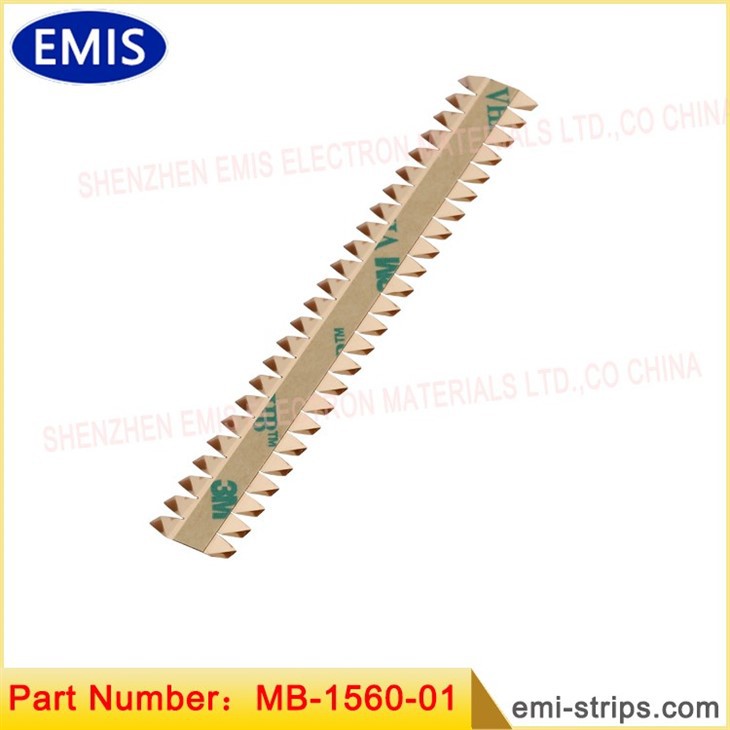
Another product is the Beryllium Copper Strip for Gap Shielding 0097056002. This strip is designed to fill gaps and provide a continuous conductive path, which is crucial for blocking EMI. It also has a relatively low resistance, making it suitable for a wide range of electronic devices.
When choosing Emi Fingerstock for your project, it's important to consider the specific requirements of your application. If you're working on a high - speed data transmission system, you'll need fingerstock with an extremely low resistance to ensure that there's no signal loss due to EMI. On the other hand, if you're working on a less sensitive application, you might be able to get away with fingerstock that has a slightly higher resistance.
It's also worth noting that the environment in which the fingerstock will be used can affect its resistance value over time. For example, exposure to high temperatures, humidity, or corrosive chemicals can cause the material to degrade, which may increase the resistance. That's why it's important to choose fingerstock that's designed to withstand the specific environmental conditions of your application.
In conclusion, the resistance value of Emi Fingerstock is a crucial factor in determining its effectiveness as an EMI shielding material. By understanding the factors that affect resistance and choosing the right fingerstock for your needs, you can ensure that your electronic devices are well - protected from unwanted electromagnetic interference.
If you're in the market for Emi Fingerstock, I'd love to have a chat with you. Whether you have questions about resistance values, product specifications, or just need some advice on which product is right for your project, I'm here to help. Let's start a conversation and see how we can work together to meet your EMI shielding needs.
References
- Basic Electrical Engineering textbooks
- Manufacturer's data sheets for Emi Fingerstock products


