


In the realm of modern electronics, electromagnetic interference (EMI) is a persistent challenge that can significantly degrade the performance of electronic devices. SMT EMI Contact Fingers play a crucial role in mitigating this issue by providing a reliable electrical connection and shielding against EMI. As a leading supplier of SMT EMI Contact Finger, I have witnessed firsthand how the quality of these components can impact their performance. In this blog post, I will delve into the various aspects of SMT EMI Contact Finger quality and its influence on overall performance.
Material Quality
The choice of materials is fundamental to the quality and performance of SMT EMI Contact Fingers. High - quality materials ensure good electrical conductivity, mechanical durability, and corrosion resistance.
Electrical Conductivity
Copper alloys are commonly used in SMT EMI Contact Fingers due to their excellent electrical conductivity. For example, phosphor - bronze and beryllium - copper are popular choices. Phosphor - bronze offers a good balance between conductivity and mechanical strength. It has a relatively high electrical conductivity, which allows for efficient transfer of electrical signals and dissipation of EMI. Beryllium - copper, on the other hand, has even higher conductivity and is known for its superior spring properties. A SMT EMI Contact Finger made from high - conductivity materials can effectively reduce the impedance in the electrical path, minimizing signal loss and improving the overall EMI shielding effectiveness.
Mechanical Durability
The mechanical durability of the material is also vital. SMT EMI Contact Fingers are often subjected to repeated mechanical stress during assembly and use. A material with high tensile strength and good fatigue resistance can withstand these stresses without deforming or breaking. For instance, beryllium - copper has excellent fatigue resistance, which means it can maintain its shape and performance over a large number of cycles. This is crucial for ensuring long - term reliability of the contact finger, especially in applications where there are frequent vibrations or movements.
Corrosion Resistance
In many electronic environments, SMT EMI Contact Fingers are exposed to moisture, chemicals, and other corrosive agents. A material with good corrosion resistance can prevent the formation of oxide layers on the surface of the contact finger. Oxide layers can increase the contact resistance, leading to poor electrical performance and reduced EMI shielding. Stainless steel is sometimes used in harsh environments due to its high corrosion resistance. Additionally, proper surface treatments such as plating with gold, silver, or nickel can enhance the corrosion resistance of the contact fingers.
Manufacturing Precision
The manufacturing process of SMT EMI Contact Fingers has a significant impact on their quality and performance.
Dimensional Accuracy
Precise dimensional control is essential for ensuring proper fit and function of SMT EMI Contact Fingers. The dimensions of the contact finger, such as its length, width, and thickness, must be within tight tolerances. For example, if the contact finger is too thick, it may not fit properly in the designated SMT footprint on the PCB, leading to poor soldering and unreliable electrical connections. On the other hand, if it is too thin, it may not have sufficient mechanical strength to provide a stable contact. Advanced manufacturing techniques such as precision stamping and machining can achieve high - dimensional accuracy, ensuring consistent performance across all contact fingers.
Surface Finish
The surface finish of the SMT EMI Contact Finger affects its electrical and mechanical properties. A smooth surface finish reduces the contact resistance between the contact finger and the mating surface. It also helps to prevent the accumulation of debris and contaminants, which can interfere with the electrical connection. Polishing and plating processes are commonly used to achieve a smooth and uniform surface finish. For example, gold plating not only provides a smooth surface but also has excellent corrosion resistance and low contact resistance.
Spring Design and Performance
The spring design of the SMT EMI Contact Finger is critical for its performance. A well - designed spring should provide an appropriate contact force. If the contact force is too low, the electrical connection may be unstable, leading to intermittent signals and poor EMI shielding. Conversely, if the contact force is too high, it may cause damage to the PCB or the mating component. The spring rate, which is the amount of force required to compress the spring by a certain distance, must be carefully optimized. Finite element analysis (FEA) is often used during the design phase to simulate the spring behavior and ensure that it meets the performance requirements.
Impact on EMI Shielding Performance
The quality of SMT EMI Contact Fingers directly affects their EMI shielding performance.
Shielding Effectiveness
High - quality SMT EMI Contact Fingers can provide better shielding effectiveness. As mentioned earlier, good electrical conductivity and low contact resistance are essential for creating a continuous and low - impedance electrical path. This path helps to divert the EMI currents away from the sensitive electronic components, reducing the interference. A well - designed and manufactured contact finger can also form a tight seal between the shielding enclosure and the PCB, preventing the leakage of EMI.
Frequency Response
The frequency response of SMT EMI Contact Fingers is another important aspect. In modern electronics, there is a wide range of frequencies involved, from low - frequency power signals to high - frequency RF signals. High - quality contact fingers are designed to have a flat frequency response over a wide range of frequencies. This means that they can effectively shield against EMI across different frequency bands, providing comprehensive protection for the electronic devices.
Impact on Signal Integrity
Signal integrity is crucial in electronic systems, and the quality of SMT EMI Contact Fingers can have a significant impact on it.
Signal Loss
Poor - quality contact fingers can cause signal loss due to high contact resistance and impedance mismatches. High contact resistance can lead to voltage drops across the contact finger, reducing the strength of the electrical signal. Impedance mismatches can cause signal reflections, which can distort the signal waveform and introduce noise. High - quality contact fingers with low contact resistance and well - controlled impedance can minimize these issues, ensuring that the signals are transmitted accurately and without significant loss.
Crosstalk
Crosstalk is the interference between adjacent signal lines. SMT EMI Contact Fingers can help to reduce crosstalk by providing a shielding barrier between the signal lines. However, if the contact fingers are of poor quality, they may not be able to provide effective shielding, leading to increased crosstalk. Well - designed and manufactured contact fingers can isolate the signal lines and prevent the unwanted coupling of signals.
Importance of Quality Assurance
As a supplier of SMT EMI Contact Finger, we understand the importance of quality assurance. We implement a comprehensive quality control system throughout the manufacturing process.
Incoming Material Inspection
We carefully inspect all incoming materials to ensure that they meet our strict quality standards. This includes testing the electrical conductivity, mechanical properties, and chemical composition of the materials. Only materials that pass our inspection are used in the production of SMT EMI Contact Fingers.
In - process Inspection
During the manufacturing process, we conduct regular in - process inspections. This includes checking the dimensional accuracy, surface finish, and spring performance of the contact fingers at various stages of production. Any non - conforming products are immediately identified and corrected to ensure that the final products meet the required specifications.
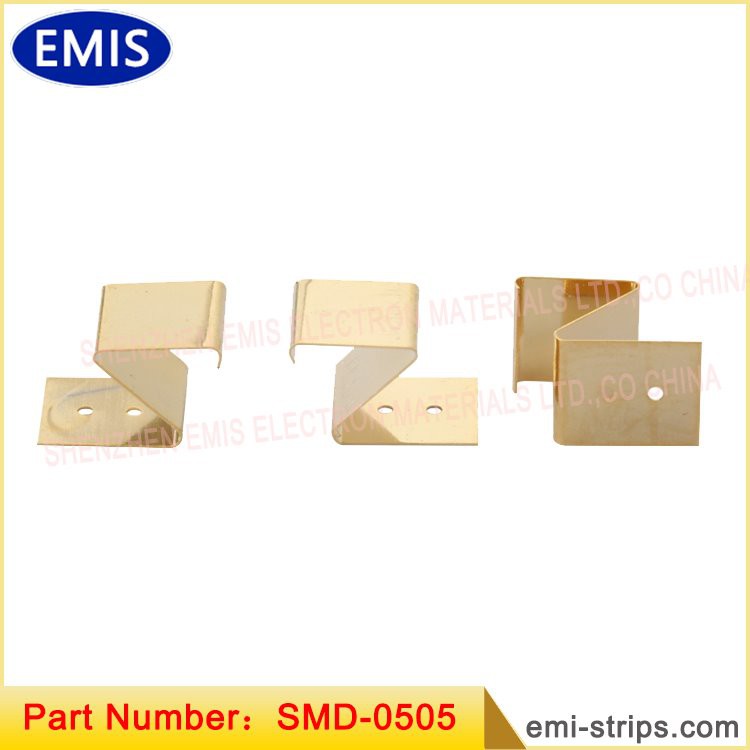

Final Product Testing
Before the products are shipped to our customers, we perform a series of final product tests. These tests include electrical performance tests, such as measuring the contact resistance and shielding effectiveness, as well as mechanical tests, such as checking the contact force and fatigue resistance. Only products that pass all the tests are released for sale.
Conclusion
The quality of SMT EMI Contact Fingers has a profound impact on their performance in terms of EMI shielding, signal integrity, and long - term reliability. From the choice of materials to the manufacturing precision and quality assurance, every aspect plays a crucial role in determining the overall quality of the contact fingers. As a trusted supplier of SMT EMI Contact Finger, we are committed to providing our customers with high - quality products that meet the most demanding requirements.
If you are in need of high - quality SMT EMI Contact Fingers, Electrical Contact Spring or Dedicated SMD Shrapnel for PCB Board, please feel free to contact us for procurement and further discussion. We look forward to working with you to meet your specific needs.
References
- "Electromagnetic Compatibility Engineering" by Henry W. Ott
- "Mechanical Design of Machine Elements and Machines: A Failure Prevention Perspective" by J. Edward Shigley, Charles R. Mischke, and Thomas H. Brown
- "Printed Circuit Board Design and Manufacturing" by Mark I. Montrose


