


Hey there! As a supplier of Emi Fingerstock, I often get asked about the differences between Emi Fingerstock and other EMI shielding products. So, I thought I'd take a few minutes to break it down for you.
First off, let's talk about what EMI shielding is all about. EMI, or electromagnetic interference, is basically the disruption that can occur when electromagnetic signals interfere with each other. This can cause all sorts of problems in electronic devices, from static on your radio to malfunctions in complex computer systems. That's where EMI shielding products come in - they're designed to block or reduce these unwanted electromagnetic signals.
Now, let's get into the nitty - gritty of Emi Fingerstock and how it stacks up against other EMI shielding products.

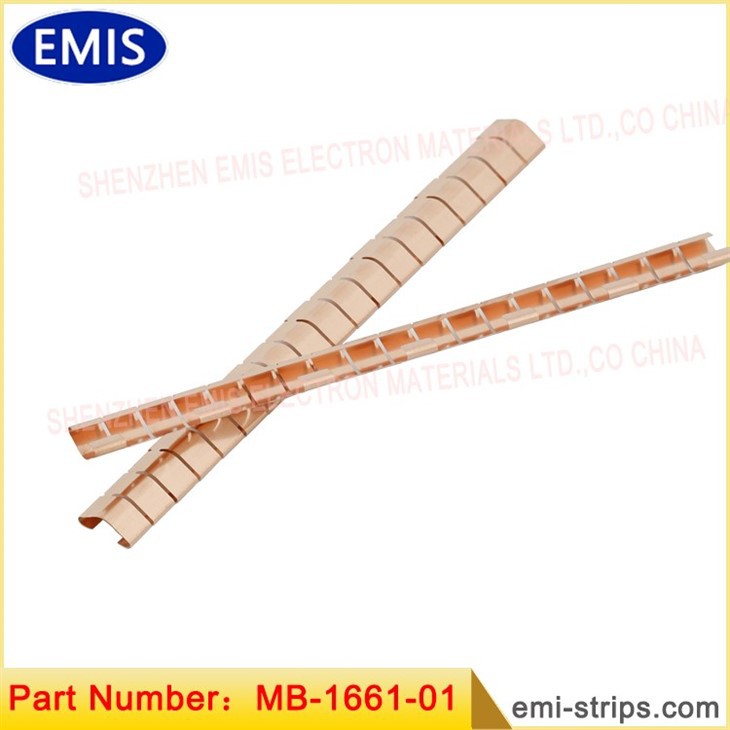
Flexibility and Adaptability
One of the biggest advantages of Emi Fingerstock is its flexibility. Unlike some other EMI shielding materials that are rigid and may not fit well in irregularly shaped enclosures, Emi Fingerstock can be easily bent and shaped to fit just about any space. This makes it a great choice for applications where the shielding needs to conform to non - standard geometries. For example, in aerospace electronics, where components are often housed in oddly shaped compartments, Emi Fingerstock can be adjusted to provide a snug fit and effective shielding.
In comparison, solid metal shields or rigid conductive foams may not be as adaptable. They might require custom - made parts for specific shapes, which can be time - consuming and expensive. Emi Fingerstock, on the other hand, can be quickly cut and bent on - site to meet the requirements of the project.
Electrical Conductivity
Emi Fingerstock typically offers excellent electrical conductivity. The fingers of the fingerstock are made from highly conductive materials such as beryllium copper. This high conductivity allows it to effectively conduct electromagnetic currents away from sensitive components, providing a reliable shield against EMI.
Some other EMI shielding products, like plastic - based conductive coatings, may have lower conductivity. These coatings can be useful in certain low - frequency applications, but when it comes to high - frequency EMI, the conductivity of Emi Fingerstock gives it a significant edge. High - frequency EMI can be particularly problematic in modern electronics, as many devices operate at very high frequencies. The Beryllium Copper Fingerstock 0097095702 is a prime example of a fingerstock product with outstanding electrical conductivity.
Durability
Durability is another area where Emi Fingerstock shines. The construction of fingerstock is designed to withstand repeated flexing and movement without losing its shielding effectiveness. This is crucial in applications where the shielding may be subject to vibration or mechanical stress. For instance, in automotive electronics, where components are exposed to constant vibrations from the engine and road conditions, Emi Fingerstock can maintain its performance over a long period.
In contrast, some other EMI shielding materials like conductive fabrics may wear out more quickly. Fabrics can fray or lose their conductivity over time, especially if they are exposed to harsh environments. Emi Fingerstock's robust design makes it a more reliable long - term solution.
Installation
Installing Emi Fingerstock is relatively straightforward. It can be easily attached to enclosures using methods such as adhesive backing or mechanical fasteners. This simplicity of installation saves time and labor costs during the manufacturing process.
Other EMI shielding products may require more complex installation procedures. For example, some liquid - applied EMI coatings need to be carefully sprayed and cured, which can be a time - consuming and skill - intensive process. The Finger Stock Gasket is a type of Emi Fingerstock that is designed for easy installation and provides a reliable seal against EMI.
Cost - Effectiveness
When it comes to cost - effectiveness, Emi Fingerstock can be a great option. While the initial cost of fingerstock may be slightly higher than some basic EMI shielding materials, its long - term benefits often outweigh the upfront expense. Its durability means that it doesn't need to be replaced as frequently as some other products, reducing overall maintenance and replacement costs.
Also, its ease of installation and adaptability can save on labor and customization costs. In comparison, some high - performance EMI shielding solutions may be extremely expensive, especially if they are custom - made for specific applications. The Plug - in Becu Fingerstock offers a cost - effective solution for many EMI shielding needs.
Compatibility with Different Environments
Emi Fingerstock can be used in a wide range of environments. It can withstand high temperatures, making it suitable for applications in industrial ovens or engine compartments. It is also resistant to corrosion, which is important in outdoor or marine applications where the shielding may be exposed to moisture and saltwater.
Some other EMI shielding materials may have limitations in extreme environments. For example, some rubber - based EMI gaskets may degrade in high - temperature environments, losing their elasticity and shielding effectiveness.
Shielding Effectiveness at Different Frequencies
Emi Fingerstock provides effective shielding across a broad range of frequencies. It can handle both low - frequency and high - frequency EMI, which is essential in modern electronics where devices operate at multiple frequencies.
In contrast, some EMI shielding products are optimized for specific frequency ranges. For example, ferrite beads are mainly used for low - frequency EMI suppression and may not be as effective at high frequencies. Emi Fingerstock's ability to provide broadband shielding makes it a versatile choice for a variety of applications.
So, there you have it - the main differences between Emi Fingerstock and other EMI shielding products. If you're in the market for EMI shielding solutions, I'd highly recommend considering Emi Fingerstock for its flexibility, conductivity, durability, ease of installation, cost - effectiveness, and compatibility with different environments.
If you're interested in learning more about our Emi Fingerstock products or discussing your specific EMI shielding needs, I'd love to have a chat. Just reach out, and we can start a conversation about how our products can meet your requirements.
References
- "Electromagnetic Compatibility Engineering" by Henry W. Ott
- "Handbook of Electromagnetic Shielding" by John Schneider


