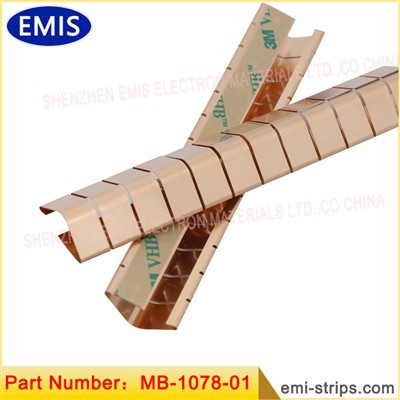

As a supplier of Standard EMI Strips, I often get asked about the acoustic performance of these products. In this blog post, I'll delve into the acoustic characteristics of Standard EMI Strips, exploring how they interact with sound waves and their potential applications in acoustic environments.
Understanding Standard EMI Strips
Before we discuss acoustic performance, let's briefly review what Standard EMI Strips are. EMI, or electromagnetic interference, is a phenomenon where electromagnetic signals disrupt the normal operation of electronic devices. Standard EMI Strips are designed to provide a conductive path that helps to divert and absorb these unwanted electromagnetic signals, protecting sensitive electronic equipment from interference.
These strips are typically made from materials such as beryllium copper (BeCu), which offers excellent electrical conductivity and mechanical properties. They come in various shapes and sizes, including Double Slots BeCu Finger Stock 0077005602, Solid Top Symmetrical Slotted BeCu Strips 0097095802, and Low Profile Hook-on Gasket, to suit different applications and requirements.
Acoustic Performance of Standard EMI Strips
The acoustic performance of Standard EMI Strips is closely related to their physical properties and structure. When sound waves encounter an EMI strip, several things can happen: reflection, absorption, and transmission.


Reflection
Reflection occurs when sound waves bounce off the surface of the EMI strip. The amount of reflection depends on the impedance mismatch between the air and the material of the strip. Materials with high acoustic impedance, such as metals, tend to reflect more sound waves than materials with low acoustic impedance, such as air.
Standard EMI Strips, being made of conductive metals like BeCu, have relatively high acoustic impedance. This means that they can reflect a significant portion of the incident sound waves, especially at higher frequencies. The reflection of sound waves can be beneficial in some applications, such as in acoustic enclosures where reducing sound leakage is important.
Absorption
Absorption refers to the process by which sound energy is converted into other forms of energy, such as heat, within the material of the EMI strip. The absorption of sound waves depends on the internal structure and composition of the strip. Materials with porous or fibrous structures tend to absorb more sound waves than solid materials.
Standard EMI Strips are generally solid and non-porous, which means that they have relatively low sound absorption capabilities. However, some EMI strips may have surface treatments or coatings that can enhance their absorption properties. For example, a strip with a micro-perforated surface can increase the absorption of sound waves by allowing them to penetrate the surface and interact with the internal structure of the strip.
Transmission
Transmission occurs when sound waves pass through the EMI strip. The amount of transmission depends on the thickness, density, and stiffness of the strip, as well as the frequency of the sound waves. Thicker, denser, and stiffer strips tend to transmit less sound waves than thinner, lighter, and more flexible strips.
Standard EMI Strips are typically designed to be thin and flexible to provide good electrical conductivity and mechanical compliance. This means that they may transmit some sound waves, especially at lower frequencies. However, the transmission of sound waves can be reduced by using multiple layers of EMI strips or by combining them with other acoustic materials, such as sound-absorbing foams or blankets.
Applications of Standard EMI Strips in Acoustic Environments
The acoustic performance of Standard EMI Strips makes them suitable for a variety of applications in acoustic environments. Here are some examples:
Acoustic Enclosures
Acoustic enclosures are used to isolate noisy equipment or processes from the surrounding environment. Standard EMI Strips can be used to seal the joints and gaps in the enclosure, reducing sound leakage and improving the overall acoustic performance. The reflection properties of the strips can help to bounce sound waves back into the enclosure, while the absorption properties of any surface treatments or coatings can help to reduce the reverberation time inside the enclosure.
Electronic Equipment
Electronic equipment, such as computers, servers, and telecommunications devices, can generate a significant amount of electromagnetic interference and noise. Standard EMI Strips can be used to shield the equipment from EMI and to reduce the noise generated by the equipment. The reflection and absorption properties of the strips can help to prevent the electromagnetic signals and sound waves from escaping the equipment and interfering with other devices or the surrounding environment.
Automotive Industry
The automotive industry uses a variety of electronic systems, such as engine control units, infotainment systems, and driver assistance systems, which can be affected by EMI and noise. Standard EMI Strips can be used to shield these systems from EMI and to reduce the noise generated by the systems. The flexibility and durability of the strips make them suitable for use in automotive applications, where they may be exposed to vibration, temperature changes, and other environmental factors.
Factors Affecting the Acoustic Performance of Standard EMI Strips
The acoustic performance of Standard EMI Strips can be affected by several factors, including:
Material Properties
The material properties of the EMI strip, such as its density, stiffness, and acoustic impedance, can have a significant impact on its acoustic performance. Different materials may have different reflection, absorption, and transmission characteristics, so it's important to choose the right material for the specific application.
Surface Finish
The surface finish of the EMI strip can also affect its acoustic performance. A smooth surface may reflect more sound waves than a rough surface, while a surface with a micro-perforated or textured finish may increase the absorption of sound waves.
Thickness and Density
The thickness and density of the EMI strip can affect its acoustic performance by changing its stiffness and mass. Thicker and denser strips tend to have higher acoustic impedance and lower transmission coefficients, which means that they can reflect and absorb more sound waves.
Installation Method
The installation method of the EMI strip can also affect its acoustic performance. A proper installation, with a tight seal and no gaps or overlaps, can help to ensure that the strip provides maximum protection against EMI and noise. Improper installation, on the other hand, can lead to sound leakage and reduced acoustic performance.
Conclusion
In conclusion, the acoustic performance of Standard EMI Strips is an important consideration in many applications where both electromagnetic interference and noise control are required. While these strips are primarily designed for EMI shielding, they can also have a significant impact on the acoustic environment. By understanding the reflection, absorption, and transmission characteristics of Standard EMI Strips, and by choosing the right material, surface finish, thickness, and installation method, it's possible to optimize their acoustic performance and achieve the desired level of EMI shielding and noise reduction.
If you're interested in learning more about the acoustic performance of Standard EMI Strips or if you have specific requirements for your application, please don't hesitate to contact us. We're a leading supplier of Standard EMI Strips and can provide you with the expertise and products you need to meet your needs. Let's start a conversation about your procurement requirements and find the best solutions together.
References
- "Electromagnetic Interference Shielding Materials: Principles, Performance, and Applications" by John D. Adam
- "Acoustics: An Introduction to Its Physical Principles and Applications" by Allan D. Pierce
- "Handbook of Noise and Vibration Control" by Malcolm J. Crocker