
What are the storage conditions for PCB Spring Contacts?
As a supplier of PCB Spring Contacts, I understand the critical importance of proper storage conditions to maintain the quality and performance of these components. PCB Spring Contacts are essential in various electronic applications, providing reliable electrical connections. In this blog post, I will delve into the specific storage conditions required for PCB Spring Contacts to ensure their longevity and functionality.
Temperature and Humidity Control
One of the most crucial factors in storing PCB Spring Contacts is controlling the temperature and humidity of the storage environment. Extreme temperatures and high humidity can have detrimental effects on the contacts, leading to corrosion, oxidation, and mechanical deformation.
The ideal temperature range for storing PCB Spring Contacts is between 20°C and 25°C (68°F and 77°F). Temperatures outside this range can cause the metal materials in the contacts to expand or contract, potentially altering their dimensions and affecting their electrical conductivity. For example, if the temperature is too high, the spring properties of the contacts may be compromised, leading to reduced contact force and unreliable connections.
Humidity also plays a significant role in the storage of PCB Spring Contacts. High humidity levels can lead to the formation of moisture on the surface of the contacts, which can cause corrosion and oxidation. The recommended relative humidity for storage is between 40% and 60%. To maintain these conditions, it is advisable to use a climate - controlled storage facility or a dehumidifier in the storage area.
Protection from Dust and Contaminants
PCB Spring Contacts are delicate components, and even small particles of dust or contaminants can interfere with their performance. Dust can accumulate on the contact surfaces, increasing the contact resistance and potentially causing electrical failures.
To protect the contacts from dust and contaminants, they should be stored in sealed containers or packaging. Anti - static bags are often used for this purpose, as they not only prevent dust from entering but also protect the contacts from electrostatic discharge (ESD). ESD can damage the contacts and other electronic components, so it is essential to handle and store them in an ESD - safe environment.
When handling the contacts, it is important to wear gloves to prevent skin oils and other contaminants from transferring to the contact surfaces. Additionally, the storage area should be kept clean and free of debris.
Avoidance of Mechanical Stress
PCB Spring Contacts are designed to have specific mechanical properties, such as spring force and deflection. Exposing them to excessive mechanical stress during storage can permanently damage these properties.
Contacts should be stored in a way that prevents them from being bent, crushed, or deformed. They should be placed in trays or holders that keep them in an upright and undisturbed position. If the contacts are stacked, they should be stacked in a way that does not put excessive pressure on the lower contacts.
For example, if you are storing Dedicated SMD Shrapnel for PCB Board, make sure they are arranged in a manner that maintains their original shape and does not cause any bending or twisting.
Separation of Different Types of Contacts
If you are storing different types of PCB Spring Contacts, it is important to separate them to avoid confusion and potential damage. Different contacts may have different specifications, such as contact force, size, and material. Mixing them together can lead to incorrect usage and potential product failures.
Each type of contact should be clearly labeled and stored in separate containers or compartments. This makes it easier to identify and retrieve the required contacts when needed.
Long - Term Storage Considerations
For long - term storage of PCB Spring Contacts, additional precautions may be necessary. Over time, even under ideal storage conditions, there may be some degradation of the contacts.
Periodic inspections should be carried out to check for any signs of corrosion, oxidation, or mechanical damage. If any issues are detected, appropriate measures should be taken, such as cleaning or replacing the affected contacts.
It is also advisable to rotate the stock regularly. This means using the oldest contacts first to ensure that they are used before their performance starts to degrade.
Specific Considerations for Different Types of PCB Spring Contacts
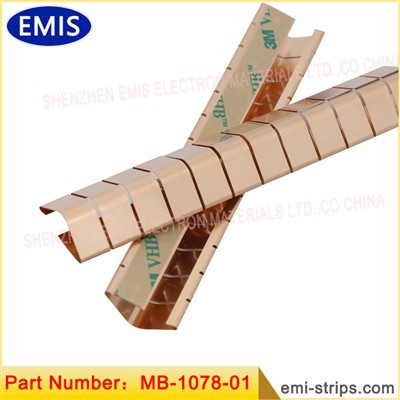
- SMT EMI Contact Finger: These contacts are often used for electromagnetic interference (EMI) shielding. They are typically made of thin metal strips, which are more prone to bending and damage. When storing SMT EMI Contact Fingers, extra care should be taken to prevent any mechanical deformation. They should be stored in flat trays with proper support to maintain their shape.
- Electrical Contact Spring: Electrical contact springs are designed to provide a reliable electrical connection through their spring action. Their performance can be significantly affected by improper storage. The storage conditions should ensure that the spring properties are not altered, and the contact surfaces remain clean and free of damage.
Importance of Proper Documentation
Proper documentation is essential when storing PCB Spring Contacts. Each batch of contacts should be labeled with information such as the part number, manufacturing date, and any special storage requirements. This documentation helps in inventory management and ensures that the contacts are used within their recommended shelf life.
It is also a good practice to keep records of the storage conditions, including temperature, humidity, and inspection results. This information can be useful for quality control and troubleshooting purposes.


In conclusion, proper storage of PCB Spring Contacts is crucial for maintaining their quality and performance. By controlling the temperature and humidity, protecting them from dust and contaminants, avoiding mechanical stress, separating different types of contacts, and taking long - term storage considerations into account, you can ensure that the contacts are in optimal condition when they are used in electronic applications.
If you are interested in purchasing high - quality PCB Spring Contacts, such as Dedicated SMD Shrapnel for PCB Board, SMT EMI Contact Finger, or Electrical Contact Spring, please feel free to contact us for more information and to discuss your specific requirements. We are committed to providing the best products and services to meet your needs.
References
- "Handbook of Electronic Packaging Technology"
- "Electrical Contacts: Principles and Applications"
- Industry standards and guidelines for electronic component storage.