


Hey there! As a supplier of RFI finger stock, I've been getting a lot of questions lately about how the material purity of RFI finger stock affects its performance. So, I thought I'd sit down and write a blog post to share my insights on this topic.
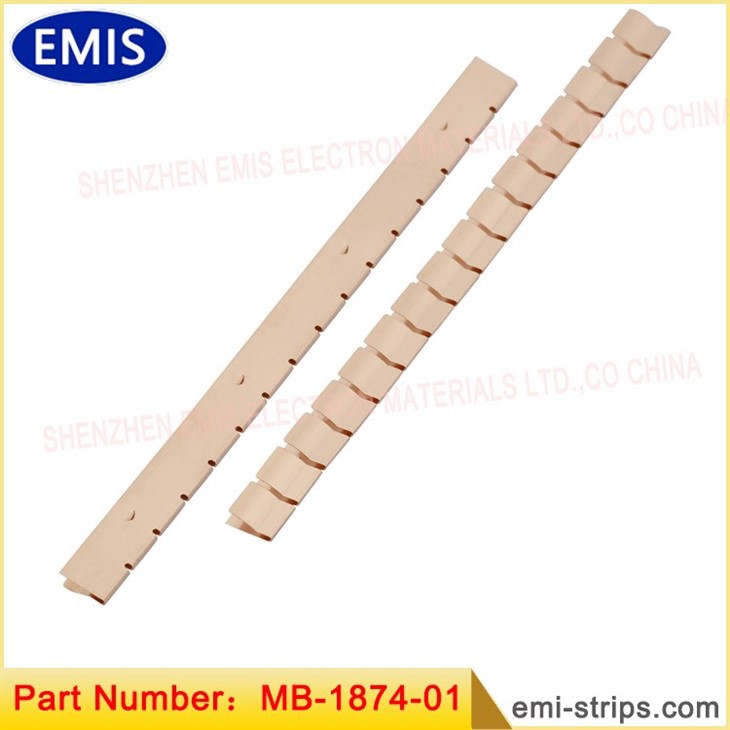
First off, let's talk about what RFI finger stock is. RFI (Radio Frequency Interference) finger stock is a type of shielding material used to prevent electromagnetic interference (EMI) and radio frequency interference from affecting electronic devices. It's made up of a series of thin, flexible fingers that are typically made from metal, such as copper, beryllium copper, or phosphor bronze. These fingers are designed to make contact with a conductive surface, creating a low-impedance path for the electromagnetic waves to flow through, thus shielding the device from interference.
Now, let's get into the main topic: how does the material purity of RFI finger stock affect its performance? Well, the purity of the material used to make the finger stock plays a crucial role in determining its electrical conductivity, mechanical properties, and corrosion resistance.
Electrical Conductivity
One of the most important factors in the performance of RFI finger stock is its electrical conductivity. The higher the conductivity of the material, the better it will be at conducting electromagnetic waves and shielding the device from interference. Pure metals generally have higher electrical conductivity than alloys because they have fewer impurities that can impede the flow of electrons.
For example, copper is a highly conductive metal that is commonly used in RFI finger stock. Pure copper has an electrical conductivity of around 58 MS/m (mega-siemens per meter), which is very high compared to other metals. However, if the copper contains impurities, such as oxygen, sulfur, or other metals, its conductivity will be reduced. This is because these impurities can form compounds with the copper atoms, creating obstacles for the flow of electrons.
In addition to reducing the conductivity, impurities can also cause other problems, such as increased resistance, which can lead to heating and power loss in the finger stock. This can be especially problematic in high-power applications where the finger stock needs to handle large amounts of current.
Mechanical Properties
Another important factor in the performance of RFI finger stock is its mechanical properties, such as flexibility, strength, and durability. The purity of the material can have a significant impact on these properties.
Pure metals are generally more flexible and ductile than alloys because they have a more uniform crystal structure. This means that they can be bent and shaped more easily without breaking or cracking. For example, beryllium copper is a popular material for RFI finger stock because it has excellent flexibility and strength. However, if the beryllium copper contains impurities, such as iron or nickel, its flexibility and ductility may be reduced.
In addition to flexibility, the strength and durability of the finger stock are also important. The finger stock needs to be able to withstand repeated bending and flexing without losing its shape or breaking. Pure metals are generally stronger and more durable than alloys because they have a more uniform crystal structure and fewer defects.
Corrosion Resistance
The corrosion resistance of RFI finger stock is also an important factor in its performance. The finger stock is often exposed to harsh environments, such as high humidity, salt water, or chemicals, which can cause it to corrode. If the finger stock corrodes, its electrical conductivity and mechanical properties will be reduced, which can lead to a decrease in its shielding effectiveness.

Pure metals are generally more corrosion-resistant than alloys because they have a more uniform surface and fewer impurities that can act as sites for corrosion. For example, copper is a relatively corrosion-resistant metal, but it can still corrode in the presence of oxygen and moisture. However, if the copper is coated with a protective layer, such as tin or nickel, its corrosion resistance can be significantly improved.
In addition to coating the finger stock, the purity of the material can also affect its corrosion resistance. If the material contains impurities, such as sulfur or chlorine, it can be more susceptible to corrosion. This is because these impurities can react with the metal to form compounds that are more easily corroded.
Examples of High-Purity RFI Finger Stock Products
At our company, we offer a range of high-purity RFI finger stock products that are designed to provide excellent performance in a variety of applications. Here are some examples:
- Clip-on Perpendicular Shielding: This product is made from high-purity copper and is designed to provide excellent shielding effectiveness in applications where space is limited. It features a clip-on design that makes it easy to install and remove, and it can be used in a variety of electronic devices, such as computers, servers, and telecommunications equipment.
- Narrow Edges EMI-strips 0097055002: This product is made from high-purity beryllium copper and is designed to provide excellent flexibility and strength. It features narrow edges that make it ideal for use in applications where space is limited, and it can be used in a variety of electronic devices, such as mobile phones, tablets, and wearable devices.
- Finger Stock EMI Shielding 0097097402: This product is made from high-purity phosphor bronze and is designed to provide excellent corrosion resistance and durability. It features a finger stock design that makes it ideal for use in applications where a high degree of flexibility and contact pressure is required, and it can be used in a variety of electronic devices, such as automotive electronics, aerospace electronics, and industrial control systems.
Conclusion
In conclusion, the material purity of RFI finger stock plays a crucial role in determining its performance. Higher purity materials generally have better electrical conductivity, mechanical properties, and corrosion resistance, which can lead to improved shielding effectiveness and longer service life. At our company, we understand the importance of material purity, and we use only the highest quality materials in our RFI finger stock products.
If you're in the market for RFI finger stock, we'd love to hear from you. We offer a wide range of products to meet your specific needs, and our team of experts is always available to provide you with technical support and advice. So, don't hesitate to contact us to discuss your requirements and get a quote.
References
- "Electrical Conductivity of Metals." Wikipedia. Wikimedia Foundation, n.d. Web.
- "Mechanical Properties of Metals." Engineering ToolBox. Engineering ToolBox, n.d. Web.
- "Corrosion Resistance of Metals." Corrosionpedia. Corrosionpedia, n.d. Web.


