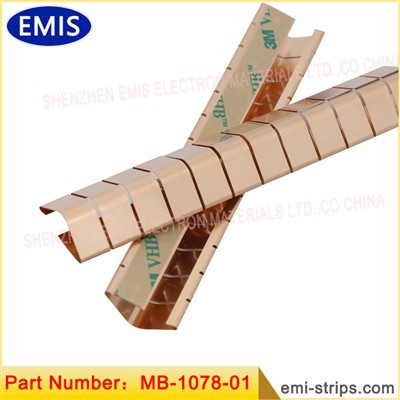

Hey there! As a supplier of Enclosure BeCu Gaskets, I've had my fair share of experiences and insights into how these gaskets perform in different environments. Today, I want to dive deep into how they fare in low - humidity environments.


Let's start with a bit of background. Enclosure BeCu Gaskets are made from Beryllium Copper (BeCu), a copper alloy that's known for its excellent electrical conductivity, high strength, and good corrosion resistance. These gaskets are used in a wide range of applications, from electronics to aerospace, to provide electromagnetic interference (EMI) shielding and environmental sealing.
Now, low - humidity environments can be quite tricky. Humidity plays a crucial role in the performance of many materials, and gaskets are no exception. In a low - humidity setting, there's less moisture in the air, which can have both positive and negative impacts on the Enclosure BeCu Gaskets.
One of the major benefits of using Enclosure BeCu Gaskets in low - humidity environments is their reduced risk of corrosion. Corrosion is a big deal when it comes to gaskets. It can weaken the material, compromise the seal, and reduce the effectiveness of EMI shielding. In a low - humidity environment, the lack of moisture means there's less chance of the BeCu reacting with oxygen and other elements in the air to form corrosion products. This means that the gaskets can maintain their structural integrity and performance over a longer period of time.
Another advantage is related to the mechanical properties of the gaskets. In low - humidity conditions, the BeCu material tends to be more stable. There's less expansion and contraction due to changes in moisture content, which can lead to a more consistent fit and better sealing. This is especially important in applications where a tight seal is required to prevent the ingress of dust, dirt, and other contaminants.
But it's not all sunshine and rainbows. Low - humidity environments can also pose some challenges for Enclosure BeCu Gaskets. One of the main issues is the potential for increased brittleness. When the air is dry, the BeCu material can become more rigid and less flexible. This can make the gaskets more prone to cracking or breaking, especially if they're subjected to mechanical stress or vibration.
In addition, low humidity can also affect the surface properties of the gaskets. The dry air can cause the surface of the BeCu to become more rough and less smooth. This can reduce the effectiveness of the seal, as there may be gaps or uneven contact between the gasket and the mating surface.
To mitigate these challenges, it's important to choose the right type of Enclosure BeCu Gasket for the specific low - humidity application. For example, Clip-On BeCu Finger Stock 0097061302 is a great option for applications where flexibility is key. The finger - like design allows for some degree of movement and adjustment, which can help compensate for any brittleness caused by low humidity.
Shielded Door BeCu Strips are another good choice. These strips are designed to provide a reliable seal around doors and other openings, even in low - humidity environments. They're made from high - quality BeCu material and are engineered to withstand the challenges of dry air.
And of course, EMI Fingerstock is a versatile option that can be used in a variety of low - humidity applications. It offers excellent EMI shielding performance while also being able to adapt to different shapes and sizes.
When it comes to installation and maintenance in low - humidity environments, there are a few things to keep in mind. First, make sure to handle the gaskets with care to avoid any unnecessary stress or damage. Use the appropriate tools and techniques to ensure a proper fit.
Second, consider using a lubricant or anti - static agent on the surface of the gaskets. This can help reduce friction and prevent the build - up of static electricity, which can be a problem in dry environments.
Finally, regular inspection and maintenance are essential. Check the gaskets for any signs of wear, cracking, or corrosion on a regular basis. Replace any gaskets that show significant damage to ensure continued performance.
In conclusion, Enclosure BeCu Gaskets can perform quite well in low - humidity environments, but they do come with their own set of challenges. By understanding these challenges and taking the appropriate measures, you can ensure that your gaskets provide reliable EMI shielding and environmental sealing for a long time.
If you're in the market for Enclosure BeCu Gaskets and want to learn more about how they can work in your specific low - humidity application, don't hesitate to reach out. We're here to help you find the right solution and ensure that your project is a success. Let's have a chat about your requirements and see how we can assist you in your procurement process.
References
- "Handbook of Copper and Copper Alloys", ASM International
- "Electromagnetic Interference Shielding Materials: Principles and Applications", CRC Press