


Water resistance is a crucial factor when evaluating the performance and suitability of Emi Fingerstock in various applications. As a supplier of Emi Fingerstock, understanding the nuances of its water - resistance capabilities is essential for providing high - quality products and meeting the diverse needs of our customers.
Understanding Emi Fingerstock
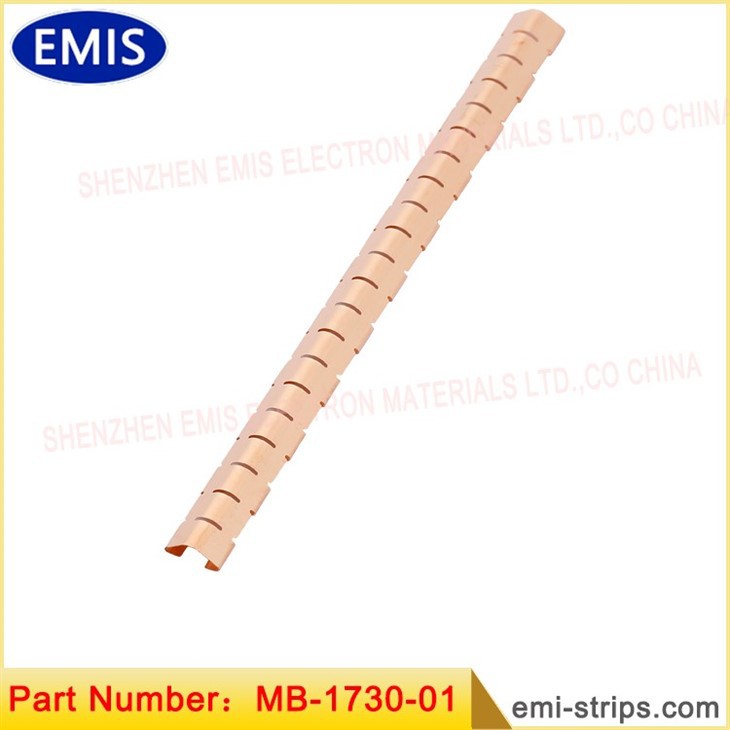
Emi Fingerstock is a type of electromagnetic interference (EMI) shielding material. It consists of multiple thin, flexible fingers made from conductive materials such as beryllium copper (BeCu), phosphor bronze, or stainless steel. These fingers are designed to provide a reliable electrical connection between two surfaces while also offering a certain degree of mechanical flexibility. This makes Emi Fingerstock ideal for applications where there is relative movement between components or where a good electrical contact needs to be maintained under different conditions.
Factors Affecting the Water - Resistance of Emi Fingerstock
Material Composition
The choice of material has a significant impact on the water - resistance of Emi Fingerstock. For instance, beryllium copper is a popular choice due to its excellent electrical conductivity and mechanical properties. However, in the presence of water, BeCu can be susceptible to corrosion, especially in environments with high humidity or when exposed to saltwater. Stainless steel, on the other hand, offers better corrosion resistance and, therefore, better water - resistance. It can withstand exposure to water for longer periods without significant degradation of its electrical and mechanical properties.
Surface Treatment
Surface treatments can enhance the water - resistance of Emi Fingerstock. For example, a nickel or tin plating can act as a barrier between the base material and water, reducing the risk of corrosion. These coatings can also improve the overall durability of the fingerstock. However, the quality of the plating process is crucial. If the plating is not uniform or has defects, water can penetrate through and reach the base material, leading to corrosion.
Design and Construction
The design of the Emi Fingerstock also plays a role in its water - resistance. A well - designed fingerstock with a tight fit and proper sealing can prevent water from seeping into the areas where electrical connections are made. For example, some Emi Fingerstock designs incorporate gaskets or seals that can effectively block water ingress. Additionally, the shape and arrangement of the fingers can influence how water interacts with the fingerstock. A design that allows water to drain easily can reduce the time that the fingerstock is in contact with water, thereby minimizing the risk of corrosion.
Testing the Water - Resistance of Emi Fingerstock
To accurately assess the water - resistance of Emi Fingerstock, various testing methods can be employed.
Salt Spray Testing
Salt spray testing is a common method used to evaluate the corrosion resistance of materials. In this test, the Emi Fingerstock samples are exposed to a fine mist of saltwater in a controlled environment. The samples are then inspected at regular intervals for signs of corrosion, such as rust or discoloration. The longer the fingerstock can withstand the salt spray without significant corrosion, the better its water - resistance.
Immersion Testing
Immersion testing involves submerging the Emi Fingerstock samples in water for a specified period. This test can simulate extreme conditions where the fingerstock may be completely submerged. After the immersion period, the samples are examined for changes in electrical conductivity, mechanical flexibility, and signs of corrosion.
Humidity Testing
Humidity testing exposes the Emi Fingerstock to high - humidity environments. This test is useful for evaluating how the fingerstock performs in normal, but humid conditions. By monitoring the electrical and mechanical properties of the fingerstock over time in a high - humidity environment, we can determine its long - term water - resistance.
Applications and Water - Resistance Requirements
Aerospace Applications
In the aerospace industry, Emi Fingerstock is used in various components, including avionics enclosures and aircraft doors. These components may be exposed to different weather conditions, including rain, snow, and high humidity. Therefore, the Emi Fingerstock used in aerospace applications must have excellent water - resistance to ensure reliable EMI shielding and prevent corrosion that could compromise the performance of the aircraft systems.
Marine Applications
Marine environments are particularly harsh due to the presence of saltwater. Emi Fingerstock used in marine applications, such as shipboard electronics and communication systems, must be highly resistant to water and corrosion. Stainless steel or properly coated BeCu fingerstock is often preferred in these applications to withstand the corrosive effects of saltwater.
Outdoor Electronics
Outdoor electronics, such as wireless base stations and surveillance cameras, are also exposed to the elements. Emi Fingerstock used in these devices needs to have good water - resistance to protect the internal components from EMI and environmental damage.

Our Product Offerings and Water - Resistance
As a supplier of Emi Fingerstock, we offer a wide range of products with varying water - resistance capabilities to meet the needs of different industries.
Our EMC Door EMI Strip 0097064502 is designed with water - resistance in mind. It is made from high - quality materials and can be treated with appropriate surface coatings to enhance its resistance to water and corrosion. This product is suitable for applications where a reliable EMI seal is required, even in wet conditions.
The EMC BeCu Strips in our portfolio offer a balance between electrical conductivity and water - resistance. While BeCu is a good conductor, we can apply special treatments to improve its resistance to water and prevent corrosion, making it suitable for applications where moderate water exposure is expected.
Our Longitudinal Grounding Gasket is another product that can be customized to meet specific water - resistance requirements. It is designed to provide a good electrical connection and can be engineered with features that enhance its ability to resist water ingress.

Conclusion
The water - resistance of Emi Fingerstock is a complex but important characteristic that depends on factors such as material composition, surface treatment, and design. By understanding these factors and conducting appropriate testing, we can ensure that our Emi Fingerstock products meet the water - resistance requirements of various industries.
If you are in need of high - quality Emi Fingerstock with excellent water - resistance, we invite you to contact us for more information and to discuss your specific requirements. Our team of experts is ready to assist you in selecting the right product for your application.
References
- "Electromagnetic Interference Shielding Materials: Fundamentals and Applications" by David A. Bell
- "Corrosion Resistance of Metals and Alloys" by George S. Kiourtsidis
- Industry standards and guidelines related to EMI shielding and environmental testing


