


As a supplier of RFI finger stock, I often encounter inquiries regarding the tear strength of this essential product. Tear strength is a crucial property that determines the durability and performance of RFI finger stock in various applications. In this blog post, I will delve into the concept of tear strength, its significance, and how it relates to RFI finger stock.
Understanding Tear Strength
Tear strength refers to the resistance of a material to tearing or splitting when subjected to a tensile force. In the context of RFI finger stock, tear strength is a measure of how well the material can withstand the forces that may cause it to tear during installation, operation, or maintenance. A high tear strength indicates that the material is less likely to tear or break, ensuring long - term reliability and effectiveness.
The tear strength of a material is influenced by several factors, including its composition, structure, and manufacturing process. For RFI finger stock, the choice of material plays a significant role in determining its tear strength. Common materials used in RFI finger stock include beryllium copper (BeCu), phosphor bronze, and stainless steel. Each of these materials has different mechanical properties, which directly affect their tear strength.
Importance of Tear Strength in RFI Finger Stock
In applications where RFI finger stock is used, such as electromagnetic compatibility (EMC) shielding and electromagnetic interference (EMI) suppression, tear strength is of utmost importance. These applications often involve harsh environments, mechanical stress, and repeated movements, which can put significant strain on the finger stock.
If the tear strength of the RFI finger stock is low, it may tear or break easily, leading to a compromised shielding effectiveness. A torn finger stock can allow electromagnetic radiation to leak through, defeating the purpose of using the shielding material in the first place. This can result in interference with electronic devices, reduced performance, and even safety hazards in some cases.
Moreover, in industries where reliability is critical, such as aerospace, defense, and medical, the tear strength of RFI finger stock can have a direct impact on the overall system reliability. A single tear in the finger stock can lead to system failures, costly repairs, and potential safety risks. Therefore, ensuring high tear strength is essential for maintaining the integrity of the shielding system.
Tear Strength of Different Materials in RFI Finger Stock
Beryllium Copper (BeCu)
Beryllium copper is a popular choice for RFI finger stock due to its excellent electrical conductivity, high strength, and good corrosion resistance. BeCu has a relatively high tear strength compared to other materials, making it suitable for applications where the finger stock may be subjected to mechanical stress.
The unique properties of beryllium copper are a result of its alloy composition. The addition of beryllium to copper enhances its strength and hardness, while maintaining good ductility. This combination of properties allows BeCu finger stock to withstand bending, stretching, and other mechanical forces without tearing easily. If you are interested in EMC BeCu Strips, they offer a great option with high tear strength for your EMC shielding needs.
Phosphor Bronze
Phosphor bronze is another material commonly used in RFI finger stock. It has good electrical conductivity and is known for its corrosion resistance and spring - like properties. While phosphor bronze has a decent tear strength, it is generally lower than that of beryllium copper.

Phosphor bronze is often used in applications where cost is a major consideration and the mechanical stress on the finger stock is relatively low. However, in applications where high tear strength is required, BeCu may be a better choice.

Stainless Steel
Stainless steel is a durable and corrosion - resistant material that can also be used for RFI finger stock. It has a relatively high tear strength, especially in certain grades. Stainless steel finger stock is often used in applications where the environment is harsh, such as in outdoor or marine settings.
However, stainless steel has lower electrical conductivity compared to BeCu and phosphor bronze. This can be a drawback in applications where high electrical conductivity is essential for effective EMI shielding.
Testing the Tear Strength of RFI Finger Stock
To ensure the quality and performance of RFI finger stock, it is important to test its tear strength. There are several standardized test methods available for measuring the tear strength of materials, such as the ASTM D624 test method for rubber and elastomers.

In the case of RFI finger stock, the test method may need to be adapted to account for the unique shape and structure of the finger stock. The test typically involves applying a tensile force to a sample of the finger stock until it tears. The force required to tear the sample is then measured and used to calculate the tear strength.
As a supplier, we conduct rigorous testing on our RFI finger stock to ensure that it meets the required tear strength standards. This helps us to provide our customers with high - quality products that are reliable and effective in their applications.
Applications and Tear Strength Requirements
The tear strength requirements for RFI finger stock vary depending on the application. In some applications, such as consumer electronics, the finger stock may not be subjected to significant mechanical stress, and a relatively lower tear strength may be acceptable.
However, in industrial, aerospace, and defense applications, the finger stock may be exposed to harsh environments, vibration, and mechanical shock. In these cases, a high tear strength is essential to ensure the long - term performance and reliability of the shielding system.
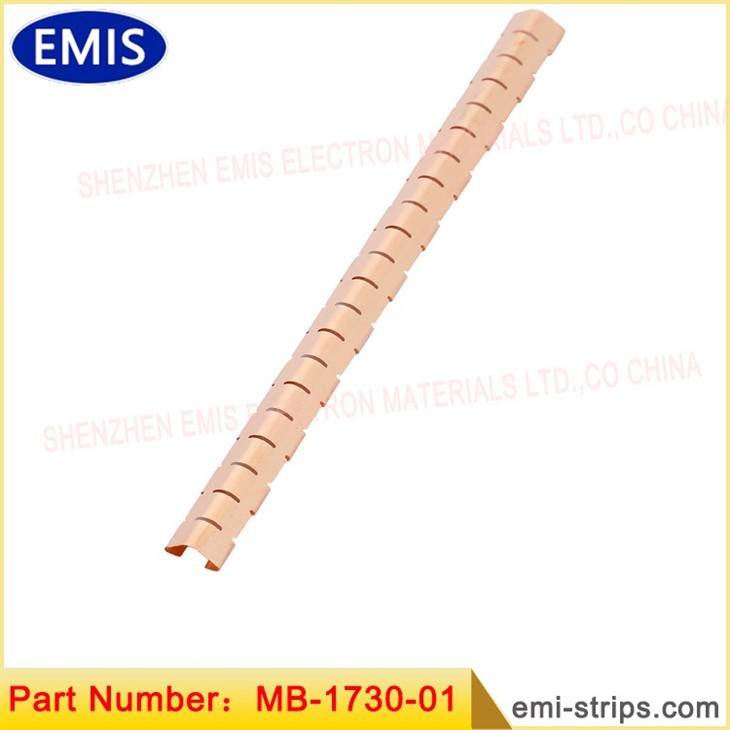
For example, in Track and Rivet Mount Fingerstock applications, the finger stock needs to withstand the forces associated with installation and repeated movement. A high tear strength ensures that the finger stock does not tear during these processes, maintaining the integrity of the shielding.
Conclusion
Tear strength is a critical property of RFI finger stock that directly impacts its durability and performance. As a supplier, we understand the importance of providing high - quality finger stock with the appropriate tear strength for different applications.
Whether you are in need of EMI Fingerstock for consumer electronics or high - performance RFI finger stock for aerospace applications, we can offer a range of products to meet your specific requirements. Our commitment to quality and testing ensures that our finger stock will provide reliable EMI shielding and long - term performance.
If you are interested in learning more about our RFI finger stock products or have specific tear strength requirements for your application, we encourage you to contact us for a consultation. Our team of experts is ready to assist you in selecting the right product for your needs and ensuring that you get the best value for your investment.
References
- ASTM International. (Year). ASTM D624 - Standard Test Method for Tear Strength of Conventional Vulcanized Rubber and Thermoplastic Elastomers.
- Metals Handbook Committee. (Year). Metals Handbook: Properties and Selection: Nonferrous Alloys and Pure Metals. ASM International.


