


Yo, what's up everyone! As a supplier of EMI Shielding Gaskets, I often get asked about the tear strength of these bad boys. So, I thought I'd take a few minutes to break it down for you and explain why it's such an important factor.
First off, let's talk about what EMI shielding gaskets are and what they do. EMI, or electromagnetic interference, is a type of noise that can disrupt the normal operation of electronic devices. EMI shielding gaskets are used to prevent this interference by creating a barrier between the electronic components and the outside world. They're typically made from a variety of materials, including metals, elastomers, and conductive polymers, and they come in a range of shapes and sizes to fit different applications.
Now, let's get to the main topic: tear strength. Tear strength is a measure of how resistant a material is to tearing when it's subjected to a force. In the case of EMI shielding gaskets, tear strength is important because these gaskets are often installed in tight spaces and subjected to a lot of stress. If the gasket tears, it can compromise the effectiveness of the shielding and allow EMI to leak through.
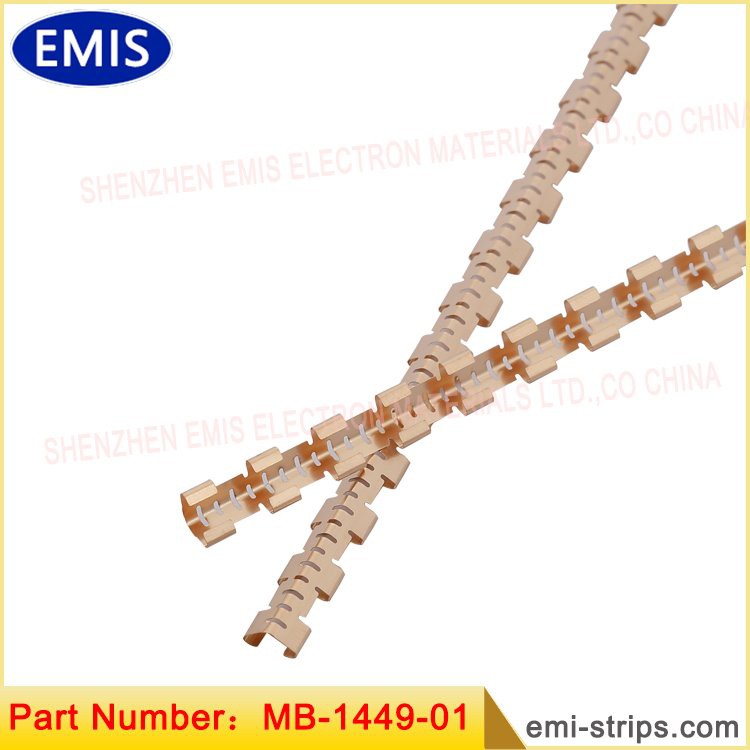
So, what factors affect the tear strength of EMI shielding gaskets? Well, there are a few things to consider. First, the material the gasket is made from plays a big role. Some materials, like metals, are naturally more resistant to tearing than others. For example, beryllium copper (BeCu) is a popular material for EMI shielding gaskets because it has excellent tear strength and conductivity. You can check out our Clip-On BeCu Finger Stock 0097061302 for a great example of a high-quality BeCu gasket.
Another factor that affects tear strength is the design of the gasket. Gaskets that are designed with a lot of sharp corners or edges are more likely to tear than those with smooth, rounded edges. This is because sharp corners and edges create stress concentrations that can cause the material to crack and tear. So, when choosing an EMI shielding gasket, it's important to look for one that has a well-designed shape.
The manufacturing process also plays a role in tear strength. Gaskets that are made using high-quality manufacturing techniques are more likely to have consistent tear strength and fewer defects. For example, gaskets that are precision-machined or molded are generally stronger and more reliable than those that are cut or stamped.
Now, let's talk about how to test the tear strength of EMI shielding gaskets. There are a few different methods that can be used, but one of the most common is the ASTM D624 test. This test measures the force required to tear a sample of the gasket material under specific conditions. The results of this test can be used to compare the tear strength of different materials and gaskets.
In addition to the ASTM D624 test, there are also other tests that can be used to evaluate the performance of EMI shielding gaskets. For example, the MIL-G-83528 test measures the shielding effectiveness of a gasket over a range of frequencies. This test is important because it helps to ensure that the gasket will provide adequate shielding in real-world applications.
So, why is tear strength so important for EMI shielding gaskets? Well, as I mentioned earlier, these gaskets are often installed in tight spaces and subjected to a lot of stress. If the gasket tears, it can compromise the effectiveness of the shielding and allow EMI to leak through. This can cause a variety of problems, including interference with other electronic devices, data corruption, and even system failure.
In addition to the technical reasons, tear strength is also important from a cost perspective. If a gasket tears during installation or use, it will need to be replaced. This can be costly, especially if the gasket is difficult to access or requires specialized tools to install. So, by choosing a gasket with high tear strength, you can reduce the risk of tear-related failures and save money in the long run.
At our company, we understand the importance of tear strength in EMI shielding gaskets. That's why we offer a wide range of high-quality gaskets that are designed to provide excellent tear strength and performance. Our EMI Shielding Gaskets are made from the best materials and manufactured using the latest techniques to ensure consistent quality and reliability.
We also offer a variety of customization options to meet the specific needs of our customers. Whether you need a gasket with a unique shape, size, or material, we can work with you to create a solution that meets your requirements. And if you have any questions or need help choosing the right gasket for your application, our team of experts is always here to assist you.

So, if you're in the market for EMI shielding gaskets, don't overlook the importance of tear strength. By choosing a high-quality gasket with excellent tear strength, you can ensure that your electronic devices are protected from EMI and operate reliably. And if you have any questions or would like to discuss your specific needs, please don't hesitate to contact us. We'd love to help you find the perfect solution for your application.
References
- ASTM D624 - Standard Test Method for Tear Strength of Conventional Vulcanized Rubber and Thermoplastic Elastomers
- MIL-G-83528 - Gasket, Electromagnetic Interference Shielding, Metallic Finger Stock, General Specification for


