


As a supplier of RFI finger stock, I often get asked about the shear strength of these crucial components. In this blog post, I'll delve into what shear strength means in the context of RFI finger stock, why it's important, and how it impacts the performance of these products.
Understanding Shear Strength
Shear strength is a fundamental mechanical property that measures the ability of a material to resist forces that cause its internal layers to slide past one another. In the case of RFI finger stock, shear strength is particularly important because these components are often subjected to lateral forces during installation, operation, or when mating with other parts.
When an RFI finger stock is installed, it may need to be bent or flexed into position. During this process, shear forces are exerted on the fingers. If the shear strength is too low, the fingers may break or deform permanently, compromising the electrical conductivity and shielding effectiveness of the finger stock.
Factors Affecting Shear Strength
Several factors can influence the shear strength of RFI finger stock. One of the most significant factors is the material used. Common materials for RFI finger stock include beryllium copper (BeCu), phosphor bronze, and stainless steel. Each material has its own unique mechanical properties, including shear strength.
Beryllium copper is a popular choice for RFI finger stock due to its excellent electrical conductivity, high strength, and good corrosion resistance. It also has relatively high shear strength, making it suitable for applications where the finger stock may be subjected to significant lateral forces.
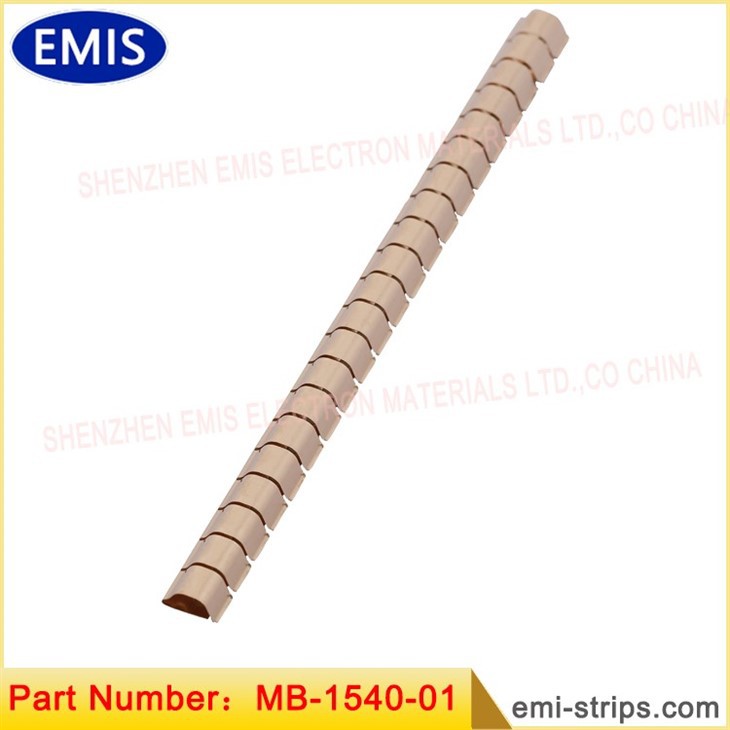

Phosphor bronze is another commonly used material. It has good electrical conductivity and is more cost - effective than beryllium copper. However, its shear strength is generally lower than that of beryllium copper.
Stainless steel is known for its high corrosion resistance and durability. While it may not have the same level of electrical conductivity as beryllium copper or phosphor bronze, it can provide adequate shielding in some applications. The shear strength of stainless steel RFI finger stock can vary depending on the specific grade of stainless steel used.
The design of the RFI finger stock also plays a role in its shear strength. Finger stock with wider fingers or a thicker cross - section will generally have higher shear strength than those with narrower or thinner fingers. Additionally, the shape of the fingers, such as whether they are straight or curved, can affect how the shear forces are distributed within the material.
Importance of Shear Strength in RFI Finger Stock Applications
In electromagnetic interference (EMI) and radio - frequency interference (RFI) shielding applications, the shear strength of RFI finger stock is crucial for maintaining the integrity of the shielding enclosure. A broken or deformed finger can create gaps in the shielding, allowing EMI/RFI to leak in or out of the enclosure.
For example, in aerospace and military applications, where strict EMI/RFI shielding requirements must be met, the shear strength of RFI finger stock is of utmost importance. These applications often involve harsh environments, vibration, and mechanical stress. If the RFI finger stock cannot withstand the shear forces generated in these conditions, it can lead to system malfunctions or even safety hazards.
In electronic devices, such as smartphones and laptops, RFI finger stock is used to shield sensitive components from external interference. The shear strength of the finger stock ensures that it remains intact during the assembly process and throughout the device's lifespan. This helps to maintain the performance and reliability of the electronic device.
Measuring Shear Strength
To accurately measure the shear strength of RFI finger stock, specialized testing equipment is required. One common method is the shear test, where a sample of the finger stock is clamped between two fixtures, and a lateral force is applied until the sample fails. The maximum force applied before failure is recorded, and the shear strength is calculated based on the cross - sectional area of the sample.
However, it's important to note that the actual shear strength experienced by RFI finger stock in real - world applications may be different from the values obtained in laboratory tests. Factors such as temperature, humidity, and the presence of contaminants can all affect the shear strength of the material.
Our RFI Finger Stock Products and Shear Strength
As a supplier of RFI finger stock, we offer a wide range of products with different materials, designs, and shear strengths to meet the diverse needs of our customers. For example, our Double Slots BeCu Finger Stock 0077005602 is made of high - quality beryllium copper, which provides excellent shear strength along with superior electrical conductivity. This product is suitable for applications where high - performance shielding and resistance to mechanical stress are required.
Our Stick - on Mounting Fingerstrips 0097054002 are designed for easy installation. They are available in different materials, including phosphor bronze and beryllium copper. The choice of material can be adjusted according to the required shear strength and other performance criteria.
Our EMI Contact Strips are another popular product line. These strips are designed to provide reliable EMI/RFI shielding in a variety of applications. We carefully select the materials and optimize the design of these strips to ensure they have the appropriate shear strength for their intended use.
Conclusion
In conclusion, the shear strength of RFI finger stock is a critical property that affects its performance and reliability in EMI/RFI shielding applications. By understanding the factors that influence shear strength, such as material selection and design, customers can make informed decisions when choosing RFI finger stock for their specific needs.
As a trusted supplier of RFI finger stock, we are committed to providing high - quality products with the appropriate shear strength and other performance characteristics. If you are in need of RFI finger stock for your application, we invite you to contact us for a detailed discussion about your requirements. Our team of experts will be happy to assist you in selecting the right product and providing technical support.
References
- ASM Handbook Volume 1: Properties and Selection: Irons, Steels, and High - Performance Alloys
- Mil - Spec standards related to EMI/RFI shielding materials
- Technical literature from material manufacturers on the mechanical properties of beryllium copper, phosphor bronze, and stainless steel.


