


What is the mechanical strength of Rf Fingerstock?
As a trusted supplier of Rf Fingerstock, I've often been asked about the mechanical strength of this remarkable product. Mechanical strength is a crucial factor in determining the performance and durability of Rf Fingerstock, especially in various applications where it needs to withstand different levels of stress and pressure.
Understanding Rf Fingerstock
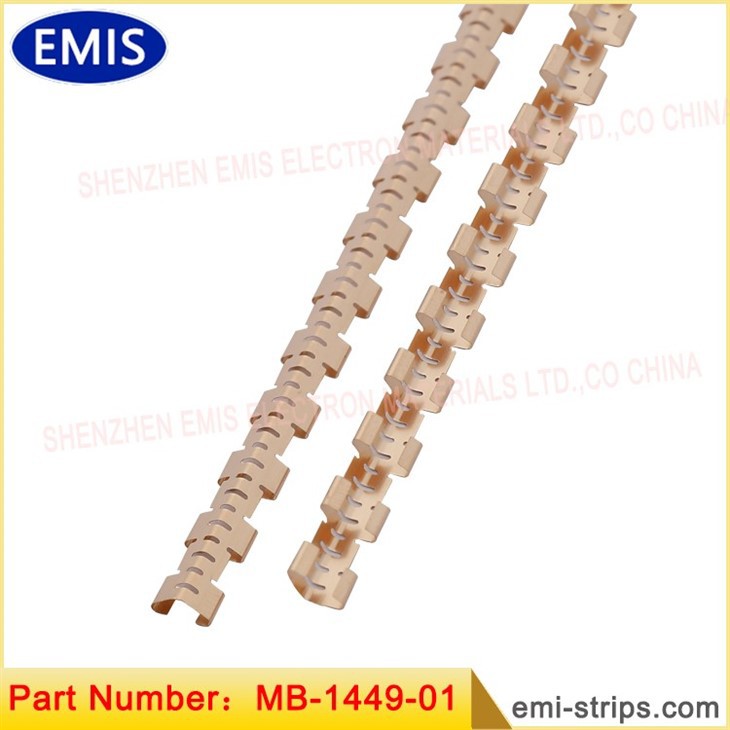
Rf Fingerstock, available at Rf Fingerstock, is a type of electromagnetic interference (EMI) shielding solution. It consists of a series of fingers or leaves that are typically made from conductive materials such as beryllium copper (BeCu). These fingers are designed to provide a flexible and reliable electrical connection while also offering shielding against electromagnetic radiation.
Factors Affecting Mechanical Strength
The mechanical strength of Rf Fingerstock is influenced by several factors, including the material used, the design of the fingers, and the manufacturing process.
Material Selection
The choice of material plays a significant role in determining the mechanical strength of Rf Fingerstock. Beryllium copper is a popular choice due to its excellent combination of electrical conductivity, corrosion resistance, and mechanical properties. It has high tensile strength and good fatigue resistance, which allows the fingerstock to maintain its shape and performance over time. Other materials such as phosphor bronze or stainless steel may also be used depending on the specific application requirements.
Finger Design
The design of the fingers in Rf Fingerstock also affects its mechanical strength. The shape, thickness, and spacing of the fingers can all impact how the fingerstock responds to stress. For example, fingers with a wider base and a tapered tip may provide better mechanical stability compared to fingers with a uniform cross - section. Additionally, the number of fingers per unit length can influence the overall strength and flexibility of the fingerstock. A higher density of fingers may increase the shielding effectiveness but could also potentially reduce the mechanical strength if not properly designed.
Manufacturing Process
The manufacturing process used to produce Rf Fingerstock can have a significant impact on its mechanical strength. Precision stamping and forming techniques are commonly used to create the fingers with consistent dimensions and properties. Heat treatment processes can also be applied to enhance the mechanical properties of the material, such as increasing its hardness and strength. However, improper manufacturing processes can lead to defects such as cracks or inconsistent finger dimensions, which can weaken the overall mechanical strength of the fingerstock.
Testing Mechanical Strength
To ensure the quality and reliability of Rf Fingerstock, various tests are conducted to measure its mechanical strength.
Tensile Testing
Tensile testing is a common method used to determine the maximum amount of tensile stress that the fingerstock can withstand before breaking. A sample of the fingerstock is clamped at both ends and gradually pulled until it fractures. The stress - strain curve obtained from the test provides information about the material's elastic modulus, yield strength, and ultimate tensile strength. This data is crucial for understanding how the fingerstock will perform under tension in real - world applications.
Compression Testing
Compression testing is used to evaluate the ability of the fingerstock to withstand compressive forces. The fingerstock is placed between two platens, and a gradually increasing load is applied until a certain deformation or failure occurs. Compression testing can help determine the maximum compression force that the fingerstock can tolerate without losing its electrical conductivity or shielding effectiveness.
Fatigue Testing
Since Rf Fingerstock may be subjected to repeated stress and strain in many applications, fatigue testing is often performed. In fatigue testing, the fingerstock is cyclically loaded with a specific stress amplitude for a large number of cycles. This simulates the real - world conditions where the fingerstock may experience repeated vibrations or movements. The number of cycles to failure is recorded, and this data is used to assess the fatigue life of the fingerstock.
Applications and Mechanical Strength Requirements
The mechanical strength requirements of Rf Fingerstock vary depending on the application.
Electronics Enclosures
In electronics enclosures, Rf Fingerstock is used to provide EMI shielding while also maintaining a mechanical seal. The fingerstock needs to be able to withstand the pressure exerted when the enclosure is closed and opened repeatedly. It should also be able to resist any external forces that may be applied during handling or transportation. For example, in a handheld electronic device, the fingerstock may need to be more flexible and have good fatigue resistance to accommodate the frequent opening and closing of the device's cover.

Aerospace and Defense Applications
In aerospace and defense applications, Rf Fingerstock is often used in critical systems where high reliability and performance are required. The fingerstock may be exposed to extreme environmental conditions, including high temperatures, vibrations, and shock. Therefore, it needs to have excellent mechanical strength and durability to ensure proper shielding and electrical connection. For instance, in avionics systems, the fingerstock must be able to withstand the vibrations and mechanical stresses associated with flight.
Telecommunications Equipment
Telecommunications equipment, such as base stations or network routers, also rely on Rf Fingerstock for EMI shielding. The fingerstock in these applications may need to be able to withstand long - term exposure to environmental factors such as humidity and temperature variations. It should also be able to maintain its mechanical strength over time to ensure consistent shielding performance.
Our Product Offerings
At our company, we offer a wide range of Rf Fingerstock products with different mechanical strength characteristics to meet the diverse needs of our customers. Our Double Slots BeCu Finger Stock 0077005602 is a prime example of our high - quality fingerstock. It is made from beryllium copper and is designed with a double - slot configuration, which provides enhanced mechanical stability and electrical conductivity.
We also offer EMI Shielding Gaskets that incorporate Rf Fingerstock technology. These gaskets are engineered to provide both excellent EMI shielding and reliable mechanical performance. They are available in various sizes and shapes to fit different application requirements.
Conclusion
The mechanical strength of Rf Fingerstock is a complex characteristic that is influenced by multiple factors, including material selection, finger design, and manufacturing processes. Understanding the mechanical strength requirements of different applications is crucial for selecting the right fingerstock product. At our company, we are committed to providing high - quality Rf Fingerstock products that meet the strictest mechanical and electrical performance standards.
If you are in need of Rf Fingerstock for your specific application and would like to discuss your requirements further, we encourage you to contact us for a detailed consultation and to explore our product offerings. Our team of experts is ready to assist you in finding the perfect solution for your EMI shielding needs.
References
- "Electromagnetic Interference Shielding Materials and Applications" by various authors in the Journal of Materials Science and Engineering.
- "Mechanical Properties of Metals and Alloys" by ASM International.
- Technical data sheets from beryllium copper and other conductive material suppliers.


