


As a trusted supplier of EMC fingers strips, I've witnessed firsthand the growing demand for these essential components in various industries. EMC fingers strips play a crucial role in electromagnetic interference (EMI) shielding, ensuring the proper functioning of electronic devices by preventing unwanted electromagnetic radiation from interfering with sensitive equipment. One of the key properties that determine the effectiveness of EMC fingers strips is their impact resistance. In this blog post, I'll delve into the concept of impact resistance in EMC fingers strips, exploring its significance, factors affecting it, and how it relates to the overall performance of these shielding solutions.
Understanding Impact Resistance in EMC Fingers Strips
Impact resistance refers to the ability of a material to withstand sudden forces or impacts without undergoing significant deformation or damage. In the context of EMC fingers strips, impact resistance is vital because these strips are often installed in environments where they may be subjected to mechanical stress, vibrations, or accidental impacts. For example, in aerospace applications, EMC fingers strips are used in aircraft avionics systems, which are exposed to high levels of vibration during flight. Similarly, in automotive electronics, these strips are installed in vehicles that may encounter rough roads or sudden shocks.
A high impact resistance ensures that the EMC fingers strips maintain their structural integrity and electrical conductivity even when subjected to external forces. This is essential for maintaining effective EMI shielding, as any damage or deformation to the strips can compromise their ability to block electromagnetic radiation. Additionally, impact-resistant EMC fingers strips have a longer service life, reducing the need for frequent replacements and minimizing downtime in critical applications.
Factors Affecting the Impact Resistance of EMC Fingers Strips
Several factors influence the impact resistance of EMC fingers strips. These include the material composition, design, and manufacturing process.
Material Composition
The choice of material is one of the most critical factors affecting the impact resistance of EMC fingers strips. Common materials used for these strips include beryllium copper, phosphor bronze, and stainless steel. Each material has its own unique properties that affect its impact resistance.
Beryllium copper is a popular choice for EMC fingers strips due to its excellent electrical conductivity, corrosion resistance, and high strength. It also has good impact resistance, making it suitable for applications where the strips may be subjected to moderate to high levels of mechanical stress. Phosphor bronze, on the other hand, is known for its good spring properties and corrosion resistance. While it has lower impact resistance compared to beryllium copper, it is still a viable option for applications with lower mechanical stress requirements. Stainless steel is another material used for EMC fingers strips, offering high corrosion resistance and good strength. However, its impact resistance may vary depending on the specific grade of stainless steel used.
Design
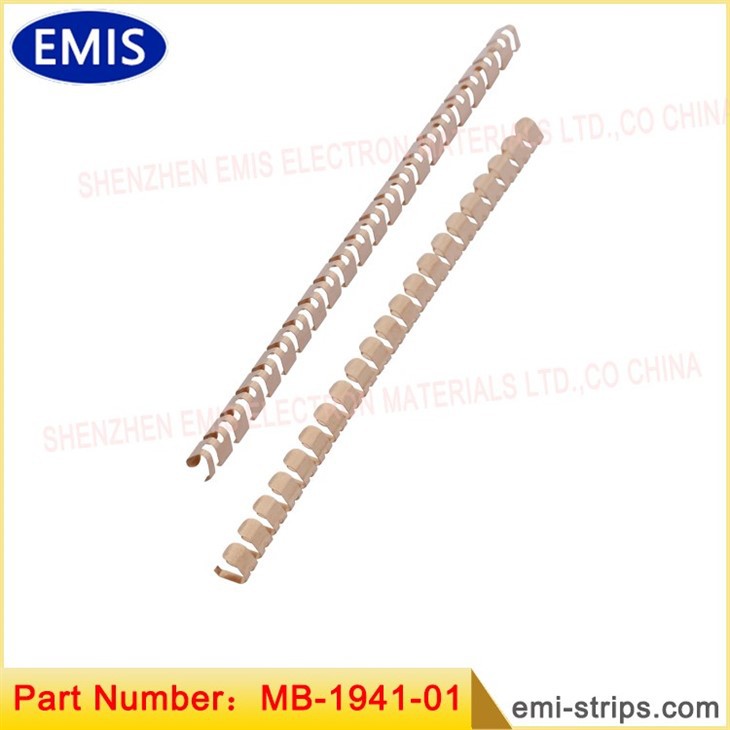
The design of the EMC fingers strips also plays a significant role in their impact resistance. Factors such as the shape, thickness, and spacing of the fingers can affect how the strips respond to impacts. For example, strips with wider fingers may be more resistant to impacts compared to those with narrower fingers, as they have a larger surface area to distribute the force. Additionally, the thickness of the fingers can influence their strength and flexibility. Thicker fingers are generally more rigid and may be better able to withstand impacts, while thinner fingers may be more flexible but may be more prone to damage.
The spacing between the fingers is another important design consideration. Proper finger spacing ensures that the strips can maintain their electrical conductivity while also providing sufficient flexibility to absorb impacts. If the fingers are too closely spaced, they may be more likely to deform or become damaged during an impact. Conversely, if the fingers are too widely spaced, the shielding effectiveness of the strips may be compromised.
Manufacturing Process
The manufacturing process used to produce EMC fingers strips can also affect their impact resistance. Precision manufacturing techniques, such as stamping and forming, can ensure that the strips are produced with consistent dimensions and high quality. This helps to minimize variations in the material properties and design, resulting in more reliable and impact-resistant strips. Additionally, proper heat treatment and surface finishing processes can enhance the strength and durability of the strips, further improving their impact resistance.
Impact Resistance and EMI Shielding Performance
The impact resistance of EMC fingers strips is closely related to their EMI shielding performance. As mentioned earlier, any damage or deformation to the strips can compromise their ability to block electromagnetic radiation. For example, if a strip is bent or broken due to an impact, it may create gaps or discontinuities in the shielding path, allowing electromagnetic waves to leak through. This can result in increased EMI levels and potential interference with other electronic devices.
On the other hand, impact-resistant EMC fingers strips are better able to maintain their shape and electrical conductivity under stress, ensuring consistent EMI shielding performance. This is particularly important in applications where strict EMI regulations must be met, such as in the aerospace and medical industries. By using high-impact-resistant strips, manufacturers can ensure that their products meet the required EMI standards and provide reliable performance in challenging environments.
Applications Requiring High Impact Resistance
There are several industries and applications where high impact resistance is a critical requirement for EMC fingers strips.

Aerospace
In the aerospace industry, EMC fingers strips are used in a wide range of applications, including avionics systems, communication equipment, and radar systems. These systems are exposed to high levels of vibration, shock, and temperature variations during flight, making impact resistance a crucial property for the EMC fingers strips. For example, in aircraft avionics, the strips are used to shield sensitive electronic components from EMI, ensuring the reliable operation of navigation and communication systems.
Automotive
The automotive industry also relies heavily on EMC fingers strips to protect electronic components from EMI. With the increasing use of advanced electronics in vehicles, such as infotainment systems, driver assistance systems, and electric powertrains, the need for effective EMI shielding has become more important than ever. EMC fingers strips used in automotive applications must be able to withstand the mechanical stress and vibrations associated with driving on rough roads, as well as the temperature and humidity variations in different environments.
Military and Defense
In military and defense applications, EMC fingers strips are used in a variety of equipment, including radar systems, communication devices, and electronic warfare systems. These applications often require high-performance shielding solutions that can withstand extreme conditions, such as high levels of shock, vibration, and electromagnetic interference. Impact-resistant EMC fingers strips are essential for ensuring the reliability and effectiveness of these critical systems.
Our EMC Fingers Strips: High Impact Resistance for Your Applications
At our company, we understand the importance of impact resistance in EMC fingers strips. That's why we offer a wide range of high-quality strips that are designed to meet the demanding requirements of various industries. Our strips are made from premium materials, such as beryllium copper and phosphor bronze, and are manufactured using advanced precision techniques to ensure consistent quality and performance.
We offer a variety of designs and configurations to suit different applications. For example, our Twisted Fingerstrips for EMI Shielding 0097055102 are designed to provide excellent flexibility and impact resistance, making them suitable for applications where the strips may be subjected to bending or twisting. Our Low Profile Hook-on Gasket is another popular option, offering a low-profile design that is easy to install and provides reliable EMI shielding. Additionally, our ESD Grounding Finger Stock Gaskets 0097004302 are specifically designed to provide electrostatic discharge (ESD) protection, ensuring the safety and reliability of electronic components.
Contact Us for Your EMC Fingers Strip Needs
If you're looking for high-impact-resistant EMC fingers strips for your application, we're here to help. Our team of experts can work with you to understand your specific requirements and recommend the best solutions for your needs. Whether you're in the aerospace, automotive, military, or any other industry, we have the experience and expertise to provide you with the highest quality EMC fingers strips.
Don't hesitate to contact us to discuss your EMC fingers strip requirements and start a procurement discussion. We're committed to providing you with the best products and services to ensure the success of your projects.
References
- "Electromagnetic Interference Shielding Materials and Applications" by John D. Adam
- "Handbook of Electronic Packaging Design and Engineering" by Richard A. Lee
- "EMI/RFI Shielding Handbook" by Frederick M. Tesche, Clayton M. Butler, and Karl F. Ianoz


