


Hey there! As a supplier of Finger Strip Gaskets, I often get asked about the friction coefficient of these nifty little products. So, I thought I'd take a deep dive into this topic and share what I've learned over the years.
First off, let's talk about what finger strip gaskets are. They're basically flexible strips made of metal or other materials that are used to seal gaps between two surfaces. These gaskets are super handy in a bunch of industries, like electronics, automotive, and aerospace. They help keep out dust, moisture, and electromagnetic interference (EMI), which is crucial for the proper functioning of sensitive equipment.
Now, the friction coefficient. It's a measure of how much friction there is between two surfaces when they're in contact. In the case of finger strip gaskets, it's all about how much resistance there is when the gasket slides against another surface. This is important because it can affect how well the gasket seals and how long it lasts.
There are a few factors that can influence the friction coefficient of finger strip gaskets. One of the main ones is the material the gasket is made of. Different metals, like copper, aluminum, and stainless steel, have different surface properties that can affect friction. For example, copper is a relatively soft metal, which means it can conform well to surfaces and create a good seal. But it also has a higher friction coefficient compared to some other metals. On the other hand, stainless steel is harder and more durable, but it may have a lower friction coefficient.
The surface finish of the gasket also plays a role. A smooth surface finish generally results in lower friction, while a rough finish can increase friction. This is because a smooth surface allows the gasket to slide more easily against the mating surface. Manufacturers can control the surface finish of the gaskets during the production process to achieve the desired friction coefficient.
Another factor is the amount of pressure applied to the gasket. When more pressure is applied, the gasket is pressed more firmly against the mating surface, which can increase the friction. However, too much pressure can also cause the gasket to deform or damage, so it's important to find the right balance.
The environment in which the gasket is used can also affect the friction coefficient. For example, if the gasket is exposed to high temperatures or corrosive chemicals, it can change the surface properties of the gasket and increase friction. Moisture can also have an impact, as it can create a lubricating effect or cause corrosion.
So, how do we measure the friction coefficient of finger strip gaskets? There are a few different methods, but one common way is to use a tribometer. This is a device that measures the force required to slide one surface against another. By measuring the force and the normal force (the force pressing the two surfaces together), we can calculate the friction coefficient.
In my experience as a supplier, the friction coefficient of finger strip gaskets can vary widely depending on the specific application and requirements. For some applications, a higher friction coefficient may be desirable to ensure a tight seal. For example, in an automotive engine, where there are high vibrations and pressures, a gasket with a higher friction coefficient can help prevent leaks. On the other hand, in some electronics applications, a lower friction coefficient may be preferred to allow for easy installation and removal of the gasket.
At our company, we offer a wide range of finger strip gaskets with different friction coefficients to meet the needs of our customers. We work closely with our clients to understand their specific requirements and recommend the best gasket for their application. Whether you need a gasket with a high or low friction coefficient, we've got you covered.
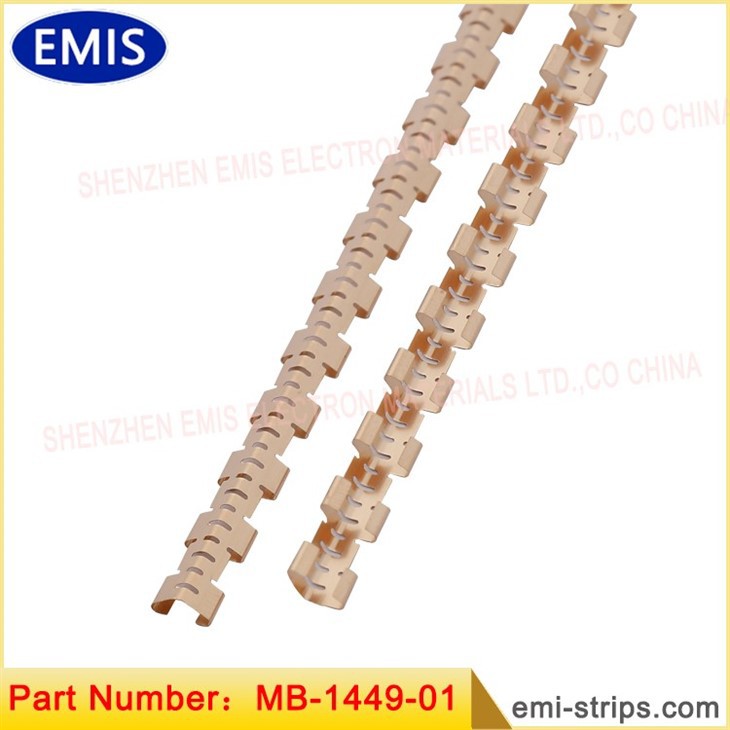

Now, let's take a look at some of the specific products we offer. We have the Twisted Finger Gaskets 0097055802, which are designed to provide excellent EMI shielding and a reliable seal. These gaskets have a unique twisted design that allows them to conform to irregular surfaces and provide a tight fit. They're made of high-quality materials and have a friction coefficient that's optimized for their intended use.
Another popular product is the EMC Door EMI Strip 0097064502. This strip is specifically designed for use in doors and enclosures to prevent EMI leakage. It has a low friction coefficient, which makes it easy to install and ensures a smooth operation. The strip is also highly durable and can withstand repeated use.
We also offer a range of EMI Shielding Gaskets that are available in different sizes and materials. These gaskets are designed to provide effective EMI shielding in a variety of applications. They have a carefully controlled friction coefficient to ensure a good seal and long-term performance.
If you're in the market for finger strip gaskets, I encourage you to reach out to us. We'd be happy to discuss your specific requirements and provide you with a quote. Our team of experts is always available to answer your questions and help you find the right gasket for your application. Whether you're a small electronics manufacturer or a large aerospace company, we have the products and expertise to meet your needs.
In conclusion, the friction coefficient of finger strip gaskets is an important factor to consider when choosing a gasket for your application. It can affect the sealing performance, durability, and ease of installation of the gasket. By understanding the factors that influence the friction coefficient and working with a trusted supplier, you can ensure that you get the best gasket for your needs. So, don't hesitate to contact us if you have any questions or need help with your gasket selection. We're here to make your life easier and ensure the success of your projects.
References
- "Engineering Tribology" by Stachowiak and Batchelor
- "Materials Science and Engineering: An Introduction" by Callister and Rethwisch


