


What are the differences between EMC BeCu Strips and other copper - based strips?
As a supplier of EMC BeCu (Beryllium Copper) Strips, I've encountered numerous inquiries regarding the disparities between EMC BeCu Strips and other copper - based strips. This blog aims to shed light on these differences, helping you make informed decisions when it comes to your material selection.
Composition and Alloy Properties
EMC BeCu Strips are primarily composed of copper with a small percentage of beryllium, typically around 0.5% - 2.0%. The addition of beryllium imparts unique properties to the alloy. Beryllium copper is known for its high strength, excellent electrical conductivity, and remarkable corrosion resistance. In contrast, other copper - based strips can vary widely in their composition. Some may be pure copper, while others could be alloys with elements like zinc (brass), tin (bronze), or nickel.
Pure copper strips have excellent electrical conductivity, but they lack the strength and hardness of BeCu. Brass, an alloy of copper and zinc, is more malleable and has good corrosion resistance in certain environments. However, its electrical conductivity is lower than that of BeCu. Bronze, which contains copper and tin, is often used for its wear - resistance and acoustic properties, but again, it may not match the electrical and mechanical performance of EMC BeCu Strips.
Electrical and Electromagnetic Properties
One of the key advantages of EMC BeCu Strips in the context of electromagnetic compatibility (EMC) is their ability to provide effective shielding against electromagnetic interference (EMI). The high electrical conductivity of BeCu allows it to conduct electrical currents efficiently, which is crucial for diverting EMI away from sensitive electronic components. When compared to other copper - based strips, EMC BeCu Strips offer better shielding effectiveness, especially in high - frequency applications.
For example, in applications where radio - frequency (RF) interference is a concern, EMC BeCu Strips can be used to create Rf Fingerstock that provide a reliable electrical connection and effective shielding. Other copper - based strips may not offer the same level of performance in terms of RF shielding, which could lead to signal degradation and reduced system performance.
Mechanical Properties
EMC BeCu Strips exhibit high strength and hardness, making them suitable for applications where the material needs to withstand mechanical stress. They can be formed into complex shapes without losing their structural integrity. This is in contrast to pure copper strips, which are relatively soft and may deform easily under stress.
The high fatigue resistance of EMC BeCu Strips is another significant advantage. In applications where the material is subjected to repeated bending or flexing, such as in Longitudinal Grounding Gasket applications, BeCu Strips can maintain their performance over a long period. Other copper - based alloys may experience fatigue failure more quickly, leading to reduced reliability and increased maintenance costs.
Thermal Properties
BeCu has good thermal conductivity, which is important in applications where heat dissipation is required. This allows EMC BeCu Strips to transfer heat efficiently, preventing overheating of electronic components. While pure copper also has high thermal conductivity, the addition of beryllium in BeCu can enhance its thermal management capabilities in certain applications.

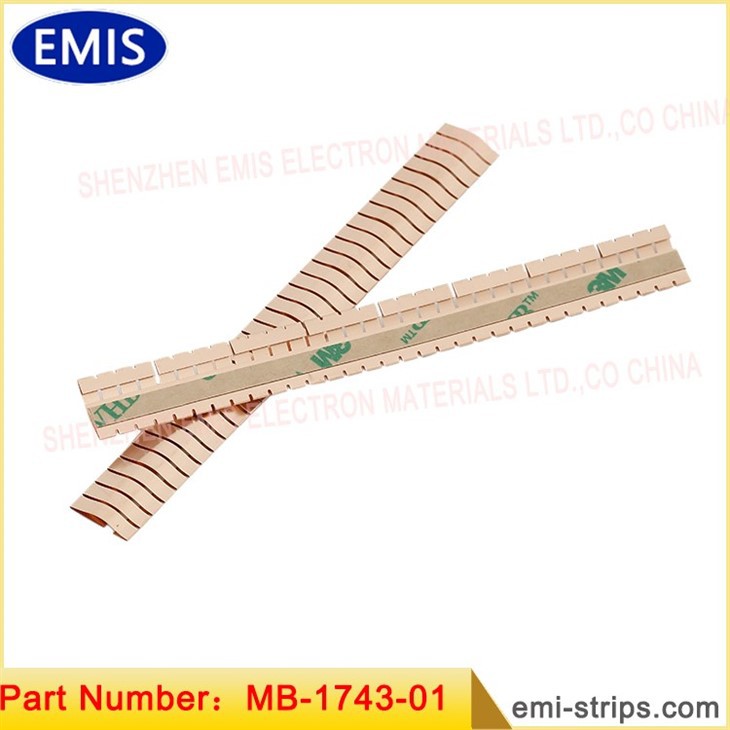
In comparison, some other copper - based alloys may have lower thermal conductivity, which could lead to heat buildup and potential damage to the components. For example, in applications where a grounding gasket needs to dissipate heat generated by electrical currents, EMC BeCu Strips would be a better choice than some other copper - based strips.
Corrosion Resistance
EMC BeCu Strips offer excellent corrosion resistance in a wide range of environments. The presence of beryllium forms a protective oxide layer on the surface of the material, which helps to prevent corrosion. This makes BeCu suitable for use in harsh environments, such as marine or industrial settings.
Other copper - based strips may not have the same level of corrosion resistance. For instance, pure copper can corrode relatively quickly in the presence of moisture and certain chemicals. Brass and bronze may also be susceptible to corrosion in specific environments, which could limit their use in applications where long - term durability is required.
Cost Considerations
It's important to note that EMC BeCu Strips are generally more expensive than some other copper - based strips. The cost of beryllium, as well as the manufacturing processes involved in producing BeCu alloys, contribute to the higher price. However, when considering the overall performance and reliability of the material, the additional cost may be justified in applications where high - performance is critical.
In applications where cost is the primary concern and the performance requirements are not as stringent, other copper - based strips may be a more suitable option. For example, in some low - frequency or non - critical applications, pure copper or brass strips may be sufficient.
Applications
The unique properties of EMC BeCu Strips make them suitable for a wide range of applications. In the electronics industry, they are commonly used for EMI shielding, grounding, and electrical contacts. They can be found in mobile devices, computers, telecommunications equipment, and aerospace applications.
In the automotive industry, EMC BeCu Strips are used for electromagnetic shielding in electronic control units (ECUs) and other sensitive components. Their high strength and corrosion resistance make them ideal for use in harsh automotive environments.
In addition, ESD Grounding Finger Stock Gaskets 0097004302 made from EMC BeCu Strips are used to protect electronic components from electrostatic discharge (ESD). The excellent electrical conductivity and mechanical properties of BeCu ensure reliable ESD protection.
Conclusion
In conclusion, EMC BeCu Strips offer several distinct advantages over other copper - based strips in terms of electrical, mechanical, thermal, and corrosion - resistant properties. While they may be more expensive, their high performance and reliability make them a preferred choice in many critical applications.
If you are in the market for high - quality copper - based strips and are considering the benefits of EMC BeCu Strips, I encourage you to reach out for a detailed discussion. Our team of experts can help you determine if EMC BeCu Strips are the right fit for your specific application and provide you with a competitive quote. Contact us today to start the procurement process and explore how our EMC BeCu Strips can enhance the performance of your products.
References
- Metals Handbook Committee. (1990). Metals Handbook: Properties and Selection: Nonferrous Alloys and Pure Metals. ASM International.
- Davis, J. R. (1999). Copper and Copper Alloys. ASM International.
- Powell, R. W. (2004). Beryllium Copper Alloys: Properties, Processing, and Applications. ASM International.


