


As a supplier of SMT EMI Contact Finger, I've witnessed firsthand the critical role these components play in electronic devices. The mechanical strength of SMT EMI Contact Finger is of utmost importance as it directly impacts the performance and reliability of the overall system. In this blog, I'll share some effective strategies on how to improve the mechanical strength of SMT EMI Contact Finger.
Understanding the Basics of SMT EMI Contact Finger
Before delving into the methods of enhancing mechanical strength, it's essential to understand what SMT EMI Contact Finger is. SMT EMI Contact Finger, also known as SMT EMI Contact Finger, is a type of spring contact used in surface - mount technology (SMT) applications. These contact fingers are designed to provide electromagnetic interference (EMI) shielding and electrical grounding in electronic devices. They are typically made of conductive materials such as copper alloys and are often gold - plated to improve conductivity and corrosion resistance.
The mechanical strength of SMT EMI Contact Finger refers to its ability to withstand mechanical stress, such as bending, compression, and vibration, without deforming or breaking. A strong contact finger ensures stable electrical contact and reliable EMI shielding over the device's lifespan.
Material Selection
One of the most fundamental ways to improve the mechanical strength of SMT EMI Contact Finger is through proper material selection. The choice of material significantly affects the contact finger's mechanical properties, including its strength, flexibility, and corrosion resistance.
High - Strength Alloys
Copper alloys are commonly used in the manufacturing of SMT EMI Contact Finger due to their excellent electrical conductivity. However, not all copper alloys are created equal. High - strength copper alloys, such as beryllium copper and phosphor bronze, offer superior mechanical properties compared to standard copper alloys.

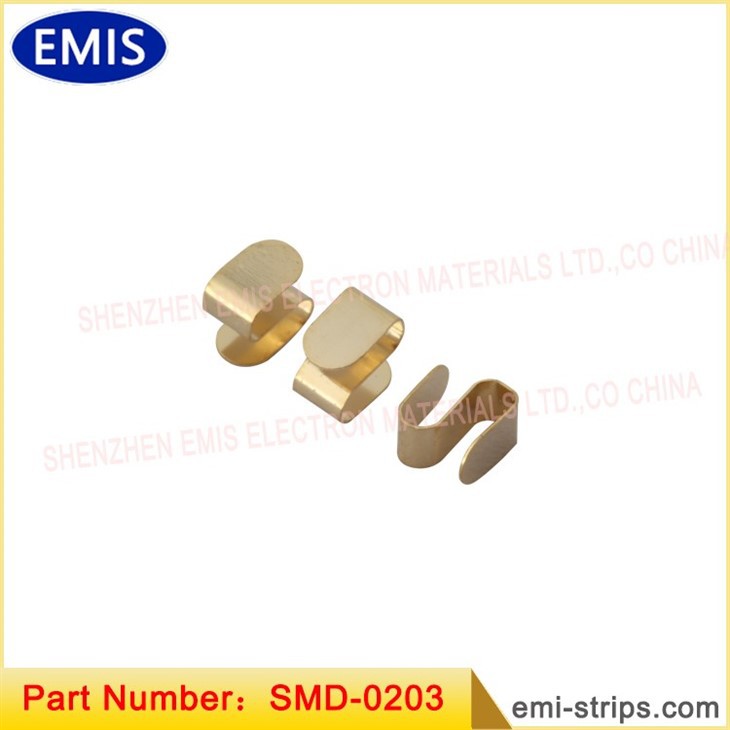
Beryllium copper is known for its high strength, good fatigue resistance, and excellent electrical conductivity. It can withstand repeated bending and flexing without losing its shape or mechanical integrity. Phosphor bronze, on the other hand, is a more cost - effective alternative with good strength and corrosion resistance. It is often used in applications where high - frequency performance is not the primary concern.
Surface Treatments
In addition to the base material, surface treatments can also enhance the mechanical strength of SMT EMI Contact Finger. Gold plating is a popular choice as it not only improves electrical conductivity but also provides a hard and wear - resistant surface. The thickness of the gold plating can be optimized to balance cost and performance. A thicker gold layer offers better wear resistance and mechanical protection, but it also increases the production cost.
Other surface treatments, such as nickel plating or tin plating, can also be used to improve the contact finger's corrosion resistance and mechanical properties. Nickel plating provides a hard and durable surface that can protect the base material from oxidation and wear. Tin plating is a cost - effective option that offers good solderability and corrosion resistance.
Design Optimization
The design of SMT EMI Contact Finger plays a crucial role in determining its mechanical strength. An optimized design can distribute stress evenly and reduce the risk of failure under mechanical loading.
Geometric Shape
The geometric shape of the contact finger can have a significant impact on its mechanical strength. For example, a contact finger with a wider base and a tapered tip can distribute stress more evenly, reducing the likelihood of stress concentration at the tip. Additionally, the shape of the contact area can be designed to ensure a large contact surface, which improves electrical conductivity and reduces the risk of arcing.
Flexure Design
Flexure is an important feature of SMT EMI Contact Finger as it allows the contact finger to bend and flex under mechanical stress. The design of the flexure should be carefully optimized to ensure sufficient flexibility while maintaining the necessary mechanical strength. A well - designed flexure can absorb shock and vibration, preventing the contact finger from breaking or deforming.
Reinforcement Features
Adding reinforcement features to the contact finger design can also improve its mechanical strength. For example, ribs or grooves can be added to the contact finger to increase its stiffness and resistance to bending. These reinforcement features can be incorporated into the design during the manufacturing process, such as stamping or molding.
Manufacturing Process Control
The manufacturing process of SMT EMI Contact Finger can also affect its mechanical strength. Strict process control is essential to ensure consistent quality and mechanical properties.
Precision Stamping
Precision stamping is a common manufacturing process for SMT EMI Contact Finger. During the stamping process, the contact finger is cut and formed from a sheet of metal. The precision of the stamping process can significantly impact the contact finger's mechanical properties. A well - controlled stamping process ensures accurate dimensions and a smooth surface finish, which reduces the risk of stress concentration and improves the contact finger's mechanical strength.
Heat Treatment
Heat treatment is another important process step that can improve the mechanical strength of SMT EMI Contact Finger. Heat treatment can be used to relieve internal stress, improve the material's hardness and toughness, and enhance its fatigue resistance. The heat treatment process should be carefully optimized based on the material and design requirements of the contact finger.
Quality Inspection
Quality inspection is an essential part of the manufacturing process to ensure that the SMT EMI Contact Finger meets the required mechanical strength standards. Various inspection methods, such as visual inspection, dimensional measurement, and mechanical testing, can be used to detect any defects or deviations from the design specifications. Only contact fingers that pass the quality inspection should be shipped to customers.
Testing and Validation
To ensure the effectiveness of the strategies for improving the mechanical strength of SMT EMI Contact Finger, it's important to conduct thorough testing and validation.
Mechanical Testing
Mechanical testing can be used to evaluate the contact finger's mechanical properties, such as its strength, flexibility, and fatigue resistance. Common mechanical tests include bending test, compression test, and vibration test. These tests can simulate the real - world operating conditions and help identify any potential weaknesses in the contact finger design or material.
Environmental Testing
Environmental testing is also important to evaluate the contact finger's performance under different environmental conditions, such as temperature, humidity, and corrosion. Environmental tests can help ensure that the contact finger maintains its mechanical strength and electrical performance over a wide range of operating conditions.
Conclusion
Improving the mechanical strength of SMT EMI Contact Finger is a multi - faceted process that involves material selection, design optimization, manufacturing process control, and testing and validation. By implementing these strategies, we can produce high - quality contact fingers that offer reliable performance and long - term durability.
As a leading supplier of SMT EMI Contact Finger, SMT Spring Contacts, and SMD Gold Plated Spring, we are committed to providing our customers with the best - in - class products. If you are interested in our products or have any questions about improving the mechanical strength of SMT EMI Contact Finger, please feel free to contact us for a procurement discussion. We look forward to working with you to meet your specific requirements.
References
- ASM Handbook Volume 2: Properties and Selection: Nonferrous Alloys and Special - Purpose Materials.
- Rohatgi, P. K. (2012). Principles of Metal Casting. McGraw - Hill Education.
- Designing Electronic Packaging for EMC. Henry W. Ott.


