


In the realm of electromagnetic interference (EMI) shielding, selecting the right solution is crucial for ensuring the proper functioning of electronic devices. Two commonly used options are RFI finger stock and gaskets. As a supplier of RFI finger stock, I am well - versed in the characteristics of both products and can offer a comprehensive comparison to help you make an informed decision.
Understanding EMI Shielding
Before delving into the comparison, it's essential to understand what EMI shielding is and why it matters. Electromagnetic interference occurs when electromagnetic radiation from one source disrupts the normal operation of another electronic device. This can lead to malfunctions, data errors, and reduced performance. EMI shielding is the process of using conductive or magnetic materials to block or reduce the transmission of electromagnetic waves.
What is RFI Finger Stock?
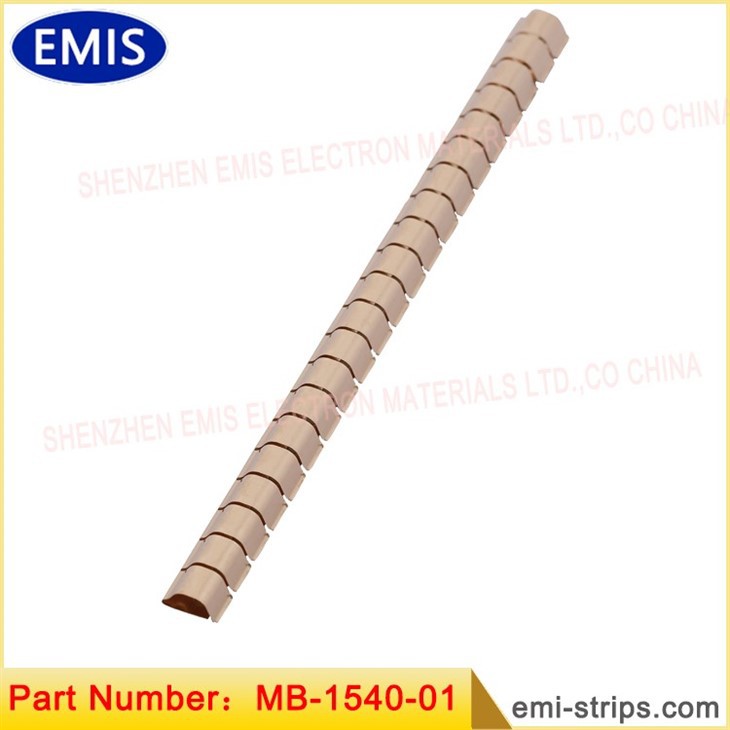
RFI finger stock is a type of EMI shielding material that consists of a series of thin, flexible metal fingers. These fingers are typically made from materials such as beryllium copper, phosphor bronze, or stainless steel. The fingers are arranged in a pattern and attached to a base material, which can be a metal strip or a flexible substrate. When compressed between two surfaces, the fingers create a conductive path that allows electromagnetic waves to be redirected or absorbed, thus providing EMI shielding.
One of the key advantages of RFI finger stock is its flexibility. The thin metal fingers can conform to irregular surfaces, making it suitable for applications where a perfect seal is difficult to achieve. It can also withstand repeated compression and expansion without losing its shielding effectiveness, which is important in applications with moving parts.
For more information about RFI finger stock, you can visit our Finger Stock Gasket page.
What are Gaskets?
Gaskets, on the other hand, are mechanical seals that are used to prevent the leakage of fluids or gases between two mating surfaces. In the context of EMI shielding, gaskets are made from conductive materials such as conductive rubber, metal - filled elastomers, or wire mesh. When installed between two surfaces, they create a continuous conductive path that blocks electromagnetic waves.
Gaskets come in a variety of shapes and sizes, including O - rings, flat gaskets, and custom - molded shapes. They are often used in applications where a hermetic seal is required, such as in electronic enclosures or aerospace components.
Comparison in Terms of EMI Shielding Effectiveness
Frequency Range
Both RFI finger stock and gaskets can provide effective EMI shielding, but their performance may vary depending on the frequency range of the electromagnetic waves. RFI finger stock generally offers good shielding performance across a wide frequency range, from low - frequency magnetic fields to high - frequency radio waves. The flexible fingers can adapt to different wavelengths, allowing for efficient absorption and redirection of electromagnetic energy.
Gaskets, on the other hand, may have a more limited frequency range. Conductive rubber gaskets, for example, are typically more effective at lower frequencies, while metal - filled elastomers may provide better shielding at higher frequencies. However, the overall performance of gaskets can be affected by factors such as the type of filler material, the density of the filler, and the compression ratio.

Contact Resistance
Contact resistance is an important factor in determining the EMI shielding effectiveness of a material. Lower contact resistance means better conductivity and more efficient shielding. RFI finger stock typically has a lower contact resistance compared to gaskets. The metal fingers make direct contact with the mating surfaces, providing a low - resistance path for the flow of electromagnetic current.
Gaskets, especially those made from elastomeric materials, may have higher contact resistance due to the presence of the polymer matrix. However, the use of conductive fillers can help reduce the contact resistance, but it may also affect other properties of the gasket, such as its flexibility and durability.
Compression and Sealing
RFI finger stock is designed to be compressed between two surfaces to create a conductive seal. The flexible fingers can conform to surface irregularities, ensuring a good electrical contact even on rough or uneven surfaces. This makes it suitable for applications where a perfect fit is not possible, such as in joints with varying gaps.
Gaskets, on the other hand, rely on compression to create a seal. They need to be compressed to a specific thickness to achieve the desired shielding performance. If the compression is not uniform or sufficient, the gasket may not provide an effective seal, leading to reduced EMI shielding. However, gaskets can provide a better hermetic seal compared to RFI finger stock, which is important in applications where protection against dust, moisture, or other contaminants is required.
Comparison in Terms of Physical Properties
Flexibility and Durability
RFI finger stock is highly flexible and can withstand repeated bending and compression without losing its shape or shielding effectiveness. This makes it suitable for applications with moving parts, such as sliding doors or rotating joints. The metal fingers can also resist corrosion and oxidation, ensuring long - term performance in harsh environments.
Gaskets, especially those made from elastomeric materials, are also flexible but may have a limited lifespan. Over time, the elastomer may degrade due to factors such as temperature, humidity, and exposure to chemicals. This can lead to a loss of flexibility and a reduction in the gasket's sealing and shielding performance.
Installation
Installing RFI finger stock is relatively straightforward. It can be attached to the mating surfaces using adhesives, mechanical fasteners, or by simply clamping it between the surfaces. The flexibility of the finger stock allows for easy installation even in tight spaces.
Gaskets may require more complex installation procedures, especially if they need to be custom - cut or molded to fit a specific application. They also need to be installed with the correct amount of compression to ensure a proper seal, which may require the use of specialized tools or equipment.
Application - Specific Considerations
Aerospace and Defense
In the aerospace and defense industries, EMI shielding is critical to ensure the reliable operation of electronic systems. RFI finger stock is often preferred in these applications due to its high shielding effectiveness, flexibility, and durability. It can be used in aircraft avionics, missile guidance systems, and military communication equipment.
Gaskets are also used in aerospace applications, especially in areas where a hermetic seal is required. For example, they can be used in fuel tanks, hydraulic systems, and electronic enclosures to prevent the leakage of fluids and gases while providing EMI shielding.
Telecommunications
In the telecommunications industry, EMI shielding is important to prevent interference between different electronic components and to ensure the quality of communication signals. RFI finger stock can be used in the enclosures of routers, switches, and base stations to provide effective EMI shielding. Its flexibility allows for easy installation in complex electronic assemblies.
Gaskets are also used in telecommunications equipment, particularly in areas where a high - level of sealing is required, such as in outdoor enclosures to protect against environmental factors.
Consumer Electronics
In consumer electronics, such as smartphones, tablets, and laptops, EMI shielding is necessary to prevent electromagnetic interference from affecting the performance of the device. RFI finger stock can be used in the internal components of these devices to provide local shielding. Its small size and flexibility make it suitable for use in compact electronic designs.
Gaskets can be used in the outer enclosures of consumer electronics to provide a seal against dust and moisture while also offering some degree of EMI shielding.
Our RFI Finger Stock Products
We offer a wide range of RFI finger stock products to meet the diverse needs of our customers. Our Narrow Edges EMI - strips 0097055002 are designed for applications where space is limited. They provide excellent EMI shielding in a compact form factor.
Our Stick - on Mounting Fingerstrips 0097054002 are easy to install and can be attached to the mating surfaces using a strong adhesive. They are ideal for applications where quick and simple installation is required.
Conclusion
In conclusion, both RFI finger stock and gaskets have their own advantages and disadvantages in terms of EMI shielding. RFI finger stock offers high flexibility, low contact resistance, and excellent performance across a wide frequency range. It is suitable for applications with irregular surfaces and moving parts. Gaskets, on the other hand, provide a better hermetic seal and can be more effective in applications where protection against contaminants is required.
When choosing between RFI finger stock and gaskets, it is important to consider the specific requirements of your application, such as the frequency range of the electromagnetic waves, the type of mating surfaces, the level of compression required, and the environmental conditions.
If you are interested in learning more about our RFI finger stock products or have any questions about EMI shielding, please feel free to contact us. We are here to help you find the best solution for your needs.
References
- "Electromagnetic Compatibility Engineering" by Henry W. Ott
- "EMI/RFI Shielding Materials and Applications" by various industry experts in the field of electromagnetic shielding.


