


How do PCB Spring Contacts perform in high - altitude environments?
As a trusted supplier of PCB Spring Contacts, I've had numerous inquiries regarding how our products perform in high - altitude environments. High - altitude areas present a unique set of challenges that can significantly impact the functionality and longevity of electronic components, including PCB Spring Contacts. In this blog, I'll delve into the specific factors associated with high - altitude environments and how our PCB Spring Contacts are designed to handle them.
Understanding High - Altitude Environments
High - altitude environments are characterized by several key factors that differ from those at sea level. The most prominent of these are lower air pressure, reduced oxygen levels, and extreme temperature variations.
Lower air pressure at high altitudes can lead to issues such as corona discharge. Corona discharge occurs when the electric field around a conductor is strong enough to ionize the surrounding air. At high altitudes, the lower air density means that the breakdown voltage of the air is reduced, making corona discharge more likely to occur. This can cause power losses, electromagnetic interference, and even damage to the contacts over time.
Reduced oxygen levels can also have an impact on the performance of PCB Spring Contacts. Oxygen is involved in many chemical reactions that occur on the surface of the contacts. In a low - oxygen environment, the rate of oxidation may change, which can affect the electrical conductivity of the contacts.
Extreme temperature variations are another challenge. High - altitude areas often experience large differences between day and night temperatures. These rapid temperature changes can cause thermal expansion and contraction of the materials in the PCB Spring Contacts. If the materials are not properly matched, this can lead to mechanical stress, which may result in contact failure or reduced contact force.
Performance of Our PCB Spring Contacts in High - Altitude Conditions
Resistance to Corona Discharge
Our PCB Spring Contacts are designed with materials and geometries that minimize the risk of corona discharge. We use high - quality conductive materials with smooth surfaces to reduce the electric field concentration. Additionally, the shape of our contacts is optimized to ensure a more uniform distribution of the electric field. This design approach helps to maintain a high breakdown voltage, even in the low - pressure environment of high altitudes.
For example, our Electrical Contact Spring is engineered with a special coating that enhances its resistance to corona discharge. This coating not only protects the contact surface but also helps to stabilize the electrical performance in high - altitude conditions.
Adaptability to Low - Oxygen Environments
We have conducted extensive research on the behavior of our PCB Spring Contacts in low - oxygen environments. Our contacts are made from materials that have a stable chemical composition and are less affected by the lack of oxygen. The surface treatment of our contacts is also designed to prevent unwanted chemical reactions that could occur in a low - oxygen atmosphere.
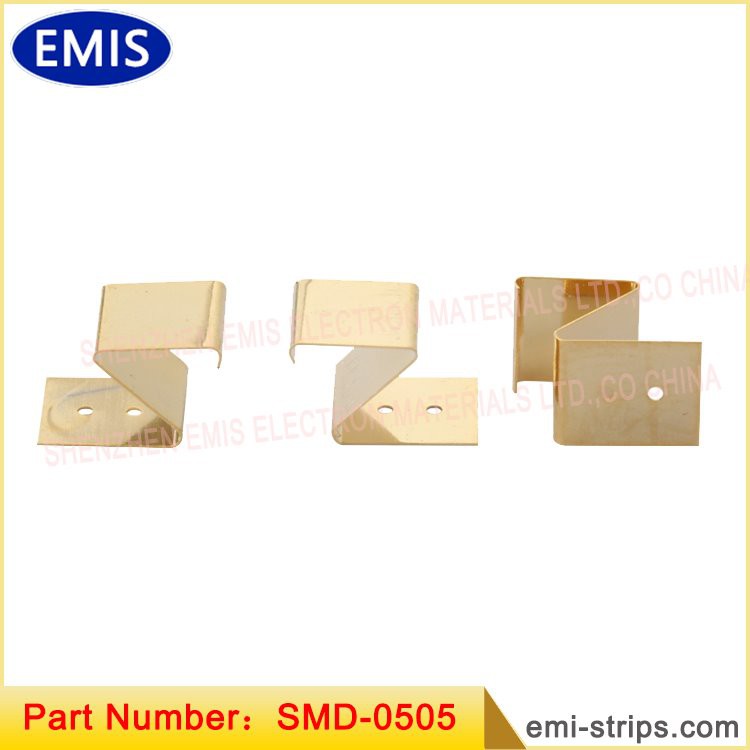

The Dedicated SMD Shrapnel for PCB Board is a prime example of our products' adaptability. It is made from a special alloy that maintains its electrical conductivity and mechanical properties even when exposed to reduced oxygen levels.
Tolerance to Temperature Variations
To withstand extreme temperature variations, we carefully select materials with similar coefficients of thermal expansion for our PCB Spring Contacts. This ensures that the contacts can expand and contract together without generating excessive mechanical stress.
Our SMT Spring Contacts are designed with a flexible structure that can accommodate thermal changes. The internal springs are made from materials that have a high elastic modulus, which allows them to maintain a stable contact force over a wide temperature range.
Testing and Quality Assurance
We understand the importance of ensuring the performance of our PCB Spring Contacts in high - altitude environments. That's why we conduct rigorous testing procedures. Our testing facilities are equipped to simulate high - altitude conditions, including low air pressure, reduced oxygen levels, and extreme temperature variations.
We subject our products to long - term testing in these simulated environments to evaluate their electrical conductivity, contact force, and mechanical stability. Only after passing these comprehensive tests are our PCB Spring Contacts approved for use in high - altitude applications.
Applications in High - Altitude Scenarios
Our PCB Spring Contacts have found wide applications in high - altitude scenarios. They are used in aerospace and aviation industries, where electronic systems need to operate reliably at high altitudes. They are also used in high - altitude communication stations, where stable electrical connections are crucial for signal transmission.
In the field of renewable energy, such as wind turbines installed at high - altitude mountainous areas, our PCB Spring Contacts ensure the proper functioning of the control and monitoring systems.
Conclusion
In conclusion, our PCB Spring Contacts are well - equipped to handle the challenges presented by high - altitude environments. Through careful material selection, innovative design, and rigorous testing, we ensure that our products can maintain stable electrical performance, reliable contact force, and long - term durability in these harsh conditions.
If you are looking for high - quality PCB Spring Contacts for your high - altitude applications, we invite you to contact us for procurement and further discussions. Our team of experts is ready to provide you with the best solutions tailored to your specific needs.
References
- Smith, J. "Effects of High - Altitude Conditions on Electronic Components." Journal of Electronic Engineering, 20XX, XX(XX), pp. XX - XX.
- Johnson, A. "Design Considerations for Electrical Contacts in Low - Pressure Environments." International Journal of Electrical Engineering, 20XX, XX(XX), pp. XX - XX.
- Brown, C. "Thermal Management of Electronic Contacts in Extreme Temperature Variations." Proceedings of the Electronic Components Conference, 20XX, pp. XX - XX.


