


Can Enclosure BeCu Gasket be used in oil - filled environments?
As a supplier of Enclosure BeCu (Beryllium Copper) gaskets, I often encounter inquiries regarding the suitability of our products in various environments. One question that comes up frequently is whether Enclosure BeCu gaskets can be used in oil - filled environments. In this blog post, I will delve into this topic, exploring the properties of BeCu gaskets, the nature of oil - filled environments, and the factors that determine their compatibility.
Properties of Enclosure BeCu Gaskets
Beryllium copper is a unique alloy known for its excellent combination of mechanical, electrical, and thermal properties. Enclosure BeCu gaskets are widely used in electronic enclosures to provide electromagnetic interference (EMI) shielding and environmental sealing.
- Mechanical Strength: BeCu has high tensile strength and good elasticity. This allows the gaskets to maintain their shape and sealing performance even under pressure. They can withstand repeated compression and relaxation cycles without significant deformation, ensuring long - term reliability.
- Electrical Conductivity: One of the key advantages of BeCu gaskets is their high electrical conductivity. This property makes them ideal for EMI shielding applications, as they can effectively divert electromagnetic waves away from sensitive electronic components.
- Corrosion Resistance: BeCu has good corrosion resistance in many environments. It forms a thin oxide layer on its surface, which acts as a protective barrier against oxidation and other forms of corrosion.
Characteristics of Oil - filled Environments
Oil - filled environments can vary widely depending on the type of oil, temperature, pressure, and other factors.
- Types of Oil: There are different types of oils used in industrial applications, such as mineral oils, synthetic oils, and vegetable oils. Each type of oil has its own chemical composition and properties. For example, mineral oils are commonly used in lubrication systems and have a relatively stable chemical structure. Synthetic oils, on the other hand, are designed to have specific performance characteristics, such as high - temperature resistance or low - viscosity.
- Temperature and Pressure: Oil - filled environments can operate at a wide range of temperatures and pressures. High - temperature applications may require oils with good thermal stability, while high - pressure environments need oils that can maintain their lubricating properties under stress.
Compatibility of Enclosure BeCu Gaskets in Oil - filled Environments
The compatibility of Enclosure BeCu gaskets in oil - filled environments depends on several factors.

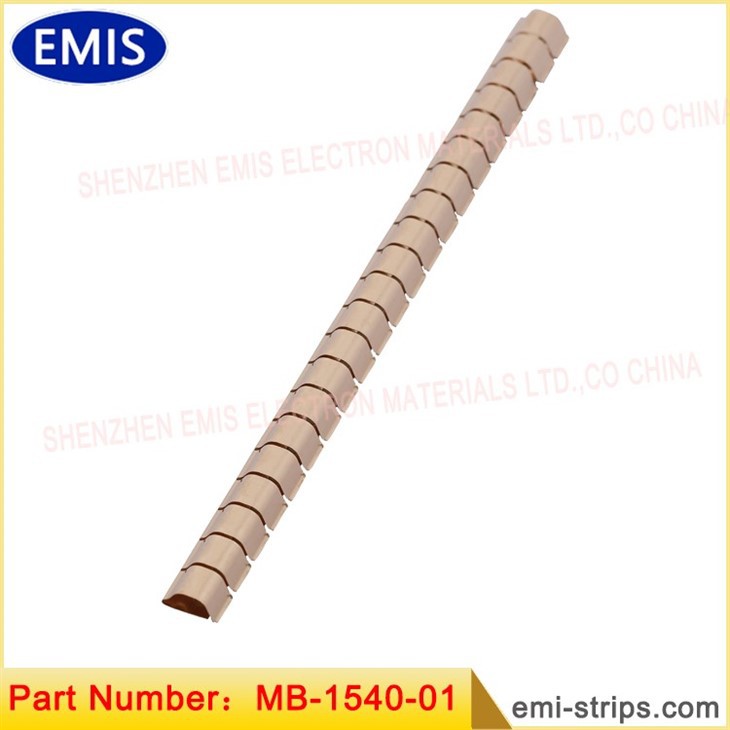
- Chemical Compatibility: The first consideration is the chemical interaction between the BeCu gasket and the oil. In general, BeCu is compatible with many types of oils. However, some oils may contain additives or contaminants that can react with the beryllium copper alloy. For example, certain sulfur - containing additives in oil can cause sulfidation of the BeCu surface, which may lead to corrosion and degradation of the gasket's performance.
- Temperature and Pressure Effects: High temperatures can accelerate chemical reactions between the gasket and the oil. At elevated temperatures, the oil may become more reactive, and the gasket's mechanical properties may change. Similarly, high pressures can affect the sealing performance of the gasket. If the pressure is too high, the gasket may be compressed beyond its elastic limit, resulting in permanent deformation and loss of sealing effectiveness.
- Sealing Performance: In an oil - filled environment, the primary function of the gasket is to prevent oil leakage. The design and installation of the gasket play a crucial role in ensuring proper sealing. A well - designed BeCu gasket with the right cross - sectional shape and compression ratio can provide an effective seal against oil.
Case Studies and Real - world Applications
To illustrate the practical use of Enclosure BeCu gaskets in oil - filled environments, let's look at some case studies.
- Automotive Industry: In automotive engines, oil - filled components such as oil pans and valve covers require reliable sealing. BeCu gaskets are sometimes used in these applications due to their excellent mechanical and sealing properties. They can withstand the high - temperature and high - pressure conditions inside the engine and prevent oil leakage.
- Industrial Machinery: Many industrial machines use oil - lubricated systems. Enclosure BeCu gaskets can be used to seal the enclosures of these machines, protecting the internal components from oil contamination and providing EMI shielding.
Related Products
If you are considering using Enclosure BeCu gaskets in oil - filled environments, you may also be interested in some of our related products.
- Stick - on Mounting Fingerstrips 0097054002: These fingerstrips are easy to install and can provide additional EMI shielding in combination with BeCu gaskets.
- T Lances EMI Gasket: The T Lances EMI Gasket is designed for high - performance EMI shielding applications. It can be used in oil - filled enclosures to enhance the overall shielding effectiveness.
- Nickel Plated Beryllium Copper Finger Strips 0097052102: The nickel plating on these finger strips provides additional corrosion resistance, which can be beneficial in oil - filled environments.
Conclusion
In conclusion, Enclosure BeCu gaskets can be used in oil - filled environments under the right conditions. Their excellent mechanical, electrical, and corrosion - resistant properties make them a viable option for many applications. However, it is essential to consider the chemical compatibility, temperature, pressure, and sealing requirements of the specific oil - filled environment.
If you are interested in using Enclosure BeCu gaskets or any of our related products in your oil - filled applications, we encourage you to contact us for a detailed discussion. Our team of experts can help you select the right gasket for your needs and provide technical support throughout the procurement process.
References
- ASM Handbook, Volume 2: Properties and Selection: Nonferrous Alloys and Special - Purpose Materials.
- "Gasket Design and Application" by Sealant and Gasket Handbook.


