


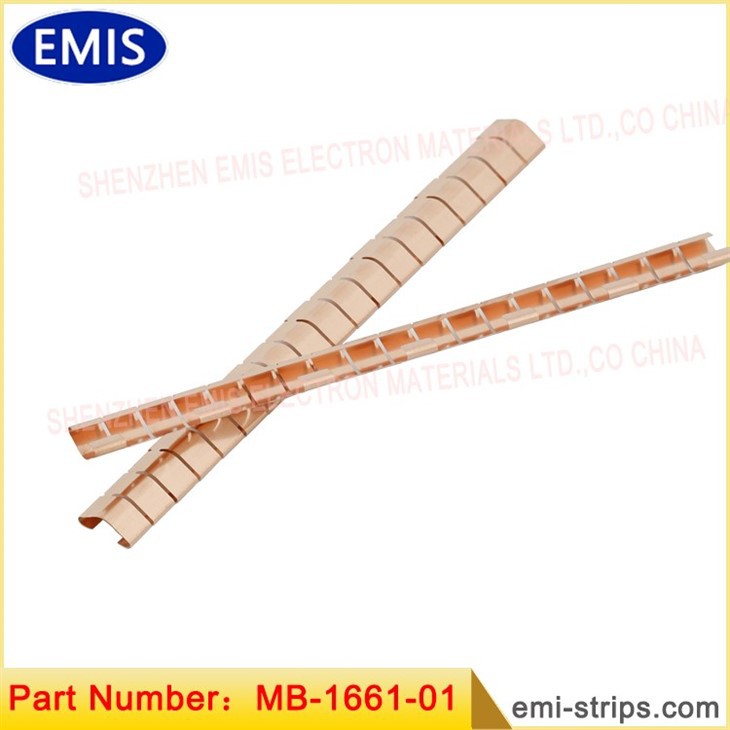
As a supplier of Emi Fingerstock, I've spent a great deal of time exploring the capabilities and applications of this remarkable product. Emi Fingerstock, also known as electromagnetic interference fingerstock, is a versatile solution used to shield electronic equipment from electromagnetic interference (EMI) and radio frequency interference (RFI). It offers excellent conductivity and flexibility, making it an ideal choice for various industries, including aerospace, telecommunications, and military. However, like any technology, Emi Fingerstock is not without its limitations. In this blog post, I'll delve into some of the potential drawbacks and considerations that you should keep in mind when using Emi Fingerstock.
Physical Durability
One of the primary limitations of Emi Fingerstock is its physical durability. The fingers of the fingerstock are typically made of thin, flexible metal, such as beryllium copper or phosphor bronze. While these materials offer excellent conductivity and flexibility, they are also relatively delicate and can be easily damaged. For example, if the fingerstock is subjected to excessive bending, stretching, or compression, the fingers may break or become deformed, which can reduce its effectiveness as an EMI shield.
In addition, the fingers of the fingerstock can be prone to wear and tear over time. This is especially true in applications where the fingerstock is exposed to frequent movement or vibration. As the fingers rub against each other or against other surfaces, they can gradually lose their shape and conductivity, which can lead to a decrease in shielding performance.
To mitigate these issues, it's important to choose the right type of Emi Fingerstock for your application and to handle it with care during installation and use. For example, if you're using the fingerstock in a high-vibration environment, you may want to consider using a thicker or more robust material. Additionally, you can take steps to protect the fingerstock from damage, such as using a protective cover or mounting it in a way that minimizes stress on the fingers.
Environmental Resistance
Another limitation of Emi Fingerstock is its environmental resistance. The metal used in the fingerstock can be susceptible to corrosion and oxidation, especially in harsh or corrosive environments. For example, if the fingerstock is exposed to moisture, saltwater, or chemicals, the metal can rust or corrode, which can reduce its conductivity and shielding performance.
In addition, the fingerstock can be affected by temperature extremes. At high temperatures, the metal can expand and become more brittle, which can increase the risk of breakage. At low temperatures, the metal can contract and become less flexible, which can make it more difficult to install and can also reduce its shielding effectiveness.
To address these issues, it's important to choose an Emi Fingerstock that is designed to withstand the environmental conditions of your application. For example, if you're using the fingerstock in a marine environment, you may want to choose a fingerstock that is made of a corrosion-resistant material, such as stainless steel. Additionally, you can take steps to protect the fingerstock from environmental damage, such as using a protective coating or storing it in a dry, temperature-controlled environment.
Cost
Cost is also a consideration when it comes to Emi Fingerstock. The materials used to make the fingerstock, such as beryllium copper and phosphor bronze, can be relatively expensive, especially in comparison to other types of EMI shielding materials. In addition, the manufacturing process for Emi Fingerstock can be complex and labor-intensive, which can also contribute to its cost.
As a result, Emi Fingerstock may not be the most cost-effective solution for all applications. In some cases, you may be able to achieve similar shielding performance using a less expensive alternative, such as conductive gaskets or tapes. However, it's important to note that these alternatives may not offer the same level of flexibility and conductivity as Emi Fingerstock, so you'll need to carefully consider your specific requirements before making a decision.

Installation Complexity
Finally, Emi Fingerstock can be relatively complex to install. The fingers of the fingerstock need to be carefully aligned and positioned to ensure proper contact with the mating surfaces, which can be challenging, especially in tight or hard-to-reach spaces. In addition, the fingerstock may need to be secured in place using screws, rivets, or other fasteners, which can add to the installation time and complexity.
To simplify the installation process, many suppliers offer Emi Fingerstock with pre-applied adhesive or mounting hardware. This can make it easier to install the fingerstock and can also reduce the risk of installation errors. Additionally, some suppliers offer installation guides and support to help you ensure that the fingerstock is installed correctly.
Conclusion
Despite these limitations, Emi Fingerstock remains a popular and effective solution for EMI and RFI shielding. Its excellent conductivity, flexibility, and shielding performance make it an ideal choice for a wide range of applications. However, it's important to be aware of the potential limitations and to take steps to mitigate them to ensure the best possible performance and reliability.
If you're considering using Emi Fingerstock for your application, I encourage you to contact us to learn more about our products and to discuss your specific requirements. We offer a wide range of Emi Fingerstock products, including Stick-on Mounting Fingerstrips 0097054002, Finger Stock Gasket, and Rf Fingerstock, and our team of experts can help you choose the right product for your needs. We also offer installation support and technical assistance to ensure that you get the most out of your Emi Fingerstock.
References
- "Electromagnetic Interference (EMI) Shielding Materials and Applications." Journal of Electronic Materials.
- "The Basics of EMI/RFI Shielding." IEEE Transactions on Electromagnetic Compatibility.
- "Design Considerations for EMI Shielding in Electronic Devices." Proceedings of the IEEE.


