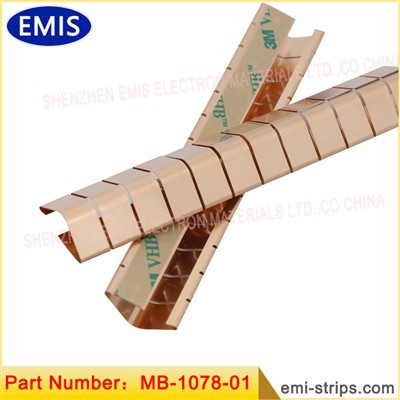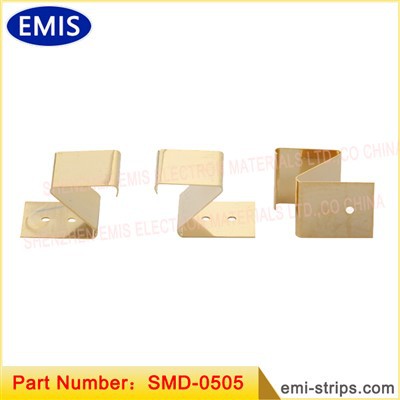

As a leading supplier of Rf Fingerstock, I often receive inquiries from customers about the installation tools required for these essential components. In this blog post, I'll delve into the key installation tools needed for Rf Fingerstock, explaining their functions and importance in ensuring a successful installation.
Understanding Rf Fingerstock
Before we discuss the installation tools, let's briefly understand what Rf Fingerstock is. Rf Fingerstock, also known as EMI/RFI shielding fingerstock, is a flexible, conductive material used to provide electromagnetic interference (EMI) and radio frequency interference (RFI) shielding in electronic enclosures. It consists of multiple fingers or strips that make contact with a mating surface, creating a low - resistance electrical path to prevent the leakage of electromagnetic signals.
Essential Installation Tools
1. Screwdrivers
Screwdrivers are one of the most basic yet crucial tools for installing Rf Fingerstock. Depending on the type of fasteners used in the installation, you may need flat - head or Phillips - head screwdrivers. For example, if the Rf Fingerstock is being attached to an enclosure using screws, a screwdriver of the appropriate size and type is necessary to tighten the screws securely. A well - tightened screw ensures good electrical contact between the fingerstock and the enclosure, which is vital for effective EMI/RFI shielding.
2. Tweezers
Tweezers are useful when dealing with small or delicate Rf Fingerstock components. They allow for precise placement of the fingerstock, especially in tight spaces or when handling individual fingers. Tweezers can help you position the fingerstock accurately on the mating surface, ensuring that each finger makes proper contact. This is particularly important for maintaining the integrity of the shielding performance. For instance, when installing EMI Copper Finger Gasket, tweezers can assist in handling the thin copper fingers without bending or damaging them.
3. Pliers
Pliers come in handy for various installation tasks. Needle - nose pliers can be used to bend or shape the Rf Fingerstock to fit specific contours or to make minor adjustments during installation. They can also be used to grip and hold the fingerstock in place while you secure it with other fasteners. For example, if you need to bend a fingerstock to fit around a curved edge of an enclosure, needle - nose pliers provide the necessary precision and control.
4. Adhesive Applicators
In some cases, Rf Fingerstock may be installed using adhesives. Adhesive applicators, such as syringes or brushes, are used to apply the adhesive evenly on the mating surface or on the back of the fingerstock. This ensures a strong bond between the fingerstock and the enclosure. When using an adhesive, it's important to apply it in the right amount and in the correct pattern to avoid excess adhesive seeping out and potentially affecting the electrical performance. For example, when installing EMI Shielding Contacts Spring, an adhesive applicator can help you apply the adhesive precisely to the contact points.
5. Measuring Tools
Accurate measurement is essential for a proper installation of Rf Fingerstock. Tools like calipers and rulers are used to measure the dimensions of the enclosure and the fingerstock. This ensures that the fingerstock is cut to the correct length and width to fit the available space. Measuring tools also help in determining the spacing between fingers and the overall alignment of the fingerstock. For example, when installing Double Slots BeCu Finger Stock 0077005602, precise measurements are required to ensure that the fingerstock fits perfectly into the double - slot design.
6. Soldering Iron (Optional)
In certain applications, soldering may be used to attach Rf Fingerstock. A soldering iron is used to melt the solder and create a permanent electrical connection between the fingerstock and the enclosure or other components. However, soldering requires skill and proper technique to avoid overheating the fingerstock, which can damage its electrical properties. Additionally, soldering may not be suitable for all types of Rf Fingerstock materials.
Importance of Using the Right Tools
Using the right installation tools is crucial for several reasons. Firstly, it ensures the proper installation of the Rf Fingerstock, which directly impacts its EMI/RFI shielding performance. A poorly installed fingerstock may have gaps or loose connections, allowing electromagnetic signals to leak through and reducing the effectiveness of the shielding. Secondly, the right tools prevent damage to the fingerstock during installation. Delicate fingerstock materials can be easily bent or broken if improper tools are used. Finally, using the correct tools makes the installation process more efficient, saving time and effort.


Tips for Installation
- Prepare the Surface: Before installing the Rf Fingerstock, make sure the mating surface is clean and free of debris, grease, or oxidation. This ensures good electrical contact and a strong bond if using adhesives.
- Follow the Manufacturer's Instructions: Each type of Rf Fingerstock may have specific installation requirements. Always refer to the manufacturer's instructions for the best results.
- Test the Installation: After installation, it's a good practice to test the EMI/RFI shielding performance using appropriate testing equipment. This helps identify any potential issues early on and allows for adjustments if necessary.
Contact Us for Your Rf Fingerstock Needs
If you're in the market for high - quality Rf Fingerstock or need more information about installation tools and techniques, we're here to help. Our team of experts can provide you with detailed guidance on choosing the right fingerstock for your application and offer support throughout the installation process. Whether you're working on a small - scale project or a large - scale industrial application, we have the products and knowledge to meet your needs. Contact us today to start a discussion about your Rf Fingerstock requirements and let's work together to achieve effective EMI/RFI shielding.
References
- "Electromagnetic Compatibility Engineering" by Henry W. Ott
- Industry standards and guidelines related to EMI/RFI shielding and component installation.